
What Should Manufacturers Consider When Buying TCMT Carbide Turning Inserts?
In CNC machining, the performance of a cutting tool directly affects production efficiency, machining accuracy, and manufacturing costs. For manufacturers that operate CNC lathes, turning centers, or automatic machining equipment, choosing the right TCMT carbide turning insert is an important decision that can influence tool life, surface quality, and overall productivity.
However, purchasing a carbide insert is not simply about choosing a model number or comparing prices. Different machining conditions require different insert designs, carbide grades, and cutting characteristics. A suitable TCMT turning insert should provide a balance between cutting efficiency, wear resistance, and machining stability. BWIN develops high-performance TCMT carbide inserts with precision manufacturing technology to support various industrial turning applications. From automotive components to precision machinery parts, BWIN helps manufacturers achieve reliable and consistent machining results.
Understanding the Structure and Advantages of TCMT Carbide Turning Inserts
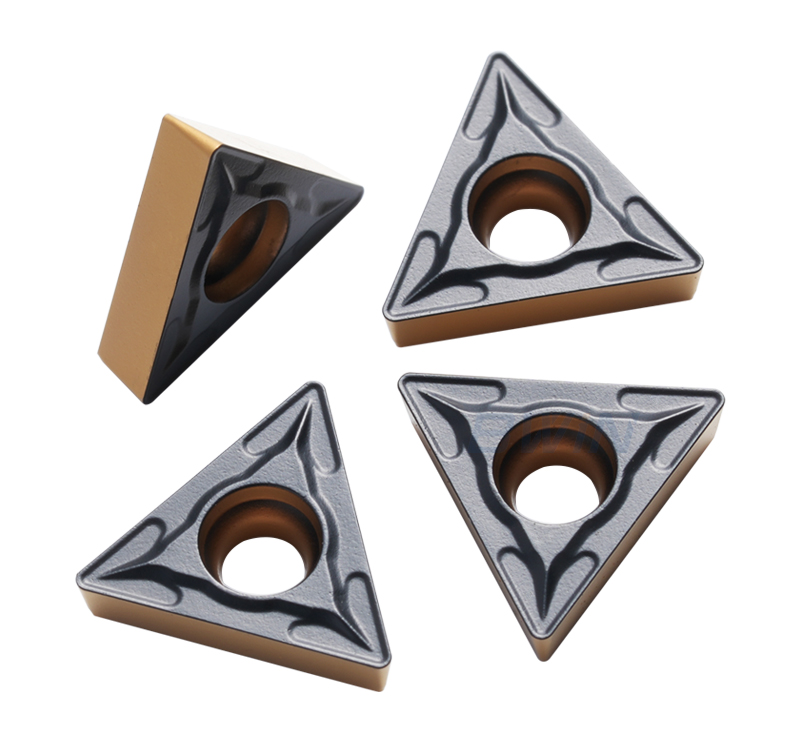
The design of a TCMT carbide turning insert plays an important role in its machining performance. Unlike some other insert shapes, TCMT inserts feature a triangular structure that provides three cutting edges. This design allows manufacturers to maximize insert utilization while maintaining stable cutting performance. The polished rake face of the insert improves chip flow during machining, helping reduce chip accumulation and supporting smoother cutting operations. The positive cutting geometry also helps lower cutting resistance, making the insert suitable for applications where machining stability and surface finish are important. For manufacturers, the structure of the insert is not only related to cutting performance but also affects production efficiency and tooling costs over time.
Carbide Substrate Quality Determines Tool Life
One of the most important factors manufacturers should consider when purchasing a TCMT carbide turning insert is the quality of the carbide substrate.
During continuous CNC machining, inserts are exposed to high temperatures, friction, and repeated cutting forces. If the carbide material does not have sufficient hardness and toughness, the cutting edge may wear quickly or suffer from chipping, resulting in unstable machining performance. A high-quality carbide substrate allows the insert to maintain its cutting ability for a longer period. It improves resistance to wear and heat while helping the cutting edge remain stable during demanding machining operations. BWIN TCMT inserts use a precision-sintered carbide substrate designed to provide reliable performance in continuous turning applications.
Choosing the Correct TCMT Insert Size for Different Machining Conditions
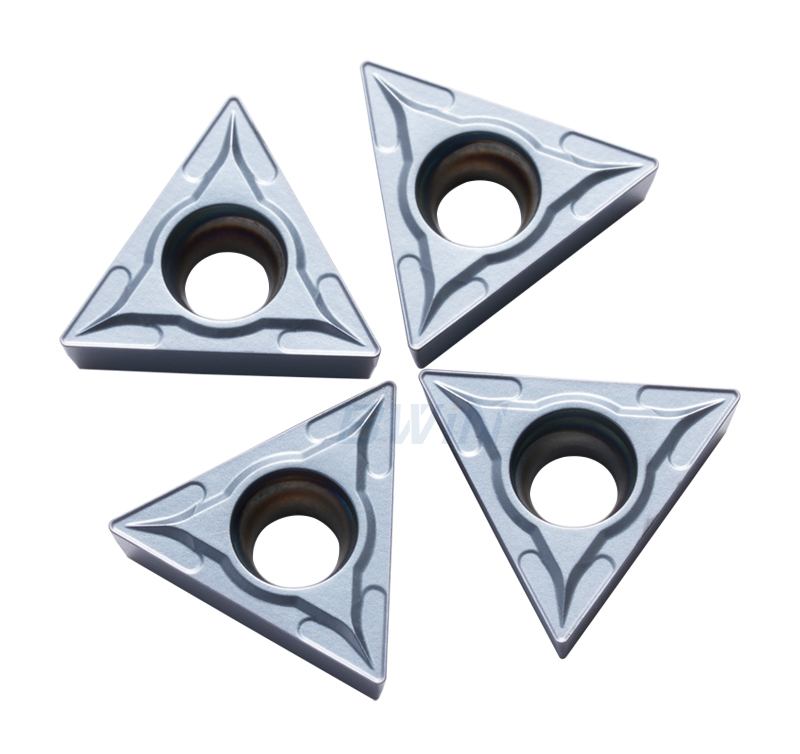
Insert size selection is another important factor when purchasing TCMT carbide turning inserts. The correct size should match the machining requirements, including cutting depth, feed rate, workpiece size, and machine capability.
BWIN provides various TCMT insert specifications, including:
- TCMT090202
- TCMT090204
- TCMT110202
- TCMT110204
- TCMT110208
- TCMT16T304
- TCMT16T308
- TCMT220408
Different sizes are designed for different machining conditions. Smaller inserts are often suitable for precision machining and lighter cutting operations, while larger inserts provide stronger cutting capability for applications requiring greater cutting depth. Selecting the appropriate insert size helps manufacturers achieve better cutting stability and avoid unnecessary tool wear.
Matching TCMT Inserts with Different Workpiece Materials
Another key consideration is whether the TCMT carbide turning insert is suitable for the material being machined. Different metals have different cutting characteristics. Carbon steel is commonly machined at high speeds and requires good wear resistance. Stainless steel creates more heat and cutting pressure because of its toughness, requiring inserts with stable edge performance. Cast iron contains abrasive particles that can accelerate tool wear if the insert material is not suitable. BWIN TCMT carbide inserts are designed for machining various ferrous materials, including carbon steel, alloy steel, stainless steel, and cast iron. By selecting the right insert according to the workpiece material, manufacturers can improve machining consistency and extend tool life.
Considering Roughing, Semi-Finishing, and Finishing Requirements
Manufacturers should also consider the type of machining operation before purchasing a TCMT turning insert.
Roughing operations usually require stronger cutting edges because larger amounts of material are removed. Semi-finishing operations require a balance between cutting efficiency and surface quality. Finishing operations focus more on dimensional accuracy and surface appearance. A suitable TCMT insert should match the specific machining stage. Using the wrong insert for a particular operation may reduce tool life and affect the final component quality. BWIN TCMT inserts are designed to support different turning processes, helping manufacturers maintain stable performance from rough machining to precision finishing.
Why Insert Consistency Matters for Industrial Production
For manufacturers, consistent performance is often more important than short-term cutting results. In large-scale production, small differences between inserts can lead to variations in machining accuracy, frequent adjustments, and increased downtime. Reliable carbide turning inserts require strict manufacturing control to ensure stable dimensions, accurate cutting edges, and consistent performance between production batches. BWIN focuses on precision manufacturing and quality control to provide dependable TCMT carbide turning inserts for industrial customers who require long-term machining stability.
Applications of TCMT Carbide Turning Inserts
Because of their versatility and stable cutting performance, TCMT inserts are widely used in many industries. In automotive manufacturing, they are used for machining shafts, engine components, and other precision metal parts. In machinery manufacturing, they support the production of various industrial components that require accurate dimensions and reliable surface finishes. TCMT carbide inserts are also commonly applied in mold production, hydraulic components, agricultural machinery, railway equipment, and general metalworking. Their ability to handle different ferrous materials makes them a practical choice for many CNC machining environments.
How to Choose a Reliable TCMT Carbide Turning Insert Supplier?
When purchasing TCMT carbide turning inserts, manufacturers should evaluate more than product specifications. A reliable supplier should have professional manufacturing experience, stable quality control, and the ability to provide suitable solutions for different machining requirements. The right supplier can help customers select appropriate insert models, optimize machining performance, and reduce unnecessary tooling costs. BWIN provides professional carbide cutting tool solutions with a focus on quality, consistency, and long-term customer support.
Conclusion: Make the Right Choice for Better CNC Machining
Choosing the right TCMT carbide turning insert requires careful consideration of carbide substrate quality, insert geometry, size selection, material compatibility, and machining requirements. A high-performance insert can help manufacturers improve machining efficiency, reduce tool replacement frequency, and maintain stable production quality.
With precision manufacturing capabilities and reliable cutting tool solutions, BWIN provides TCMT carbide turning inserts for CNC lathes, turning centers, and industrial machining applications worldwide. By selecting the right carbide insert based on actual production needs, manufacturers can achieve better machining results and improve overall operational efficiency.
Add comment