
What Causes Cutting Edge Wear in Carbide Turning Inserts During Continuous Machining?
In continuous metal turning, carbide inserts are exposed to repeated contact, friction, heat, and mechanical loads. Even when a cutting tool is properly installed, its cutting edge gradually wears as machining continues. If this wear develops too quickly, manufacturers may experience inconsistent surface finishes, dimensional deviations, frequent tool changes, and interruptions to production.
Understanding the causes of cutting edge wear is therefore important for CNC machining operations. Factors such as workpiece material, cutting speed, feed rate, machining temperature, and tool condition all influence insert performance. For manufacturers using carbide turning inserts, identifying these factors can help improve machining consistency and make tool replacement more predictable.
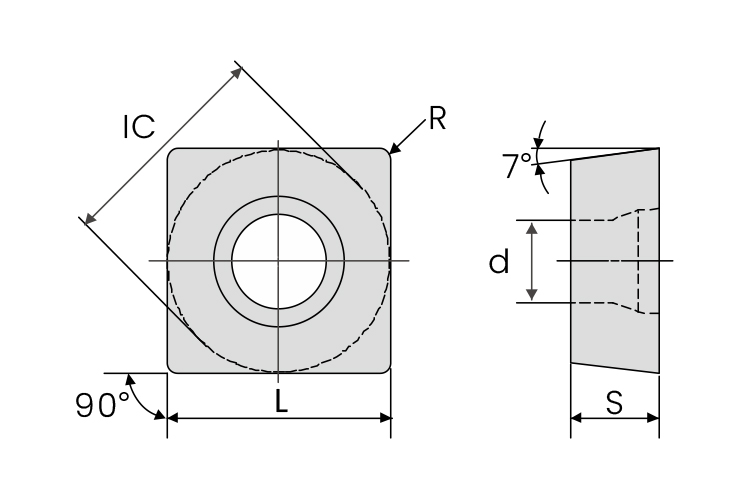
Bwin provides SCMT carbide turning inserts, including SCMT09T304 and SCMT09T308 carbide inserts, manufactured from cemented carbide material for metal turning applications. Their precision-designed cutting edges and compact square geometry support stable cutting performance across various machining tasks.
🔍 1. Abrasive Wear Caused by Hard Particles in Workpiece Materials
Abrasive wear is one of the common causes of cutting edge deterioration during continuous machining. It occurs when hard particles or abrasive constituents in the workpiece material repeatedly slide against the cutting edge. Over time, this contact gradually removes material from the insert surface.
Different metals create different levels of abrasive wear. For example, certain alloy steels contain hard constituents that can increase friction at the tool-workpiece interface. Cast iron may also contain abrasive particles that contribute to cutting edge deterioration during turning operations.
As abrasive wear progresses, the cutting edge may become less sharp, affecting cutting accuracy and surface quality. Selecting a suitable cemented carbide insert and matching the cutting conditions to the workpiece material are important steps in managing this type of wear.

🌡️ 2. High Cutting Temperatures During Continuous Turning
Heat is another major factor affecting carbide insert performance. During continuous turning, friction between the cutting edge, workpiece, and chip generates heat. Because the tool remains in contact with the material for extended periods, temperature can become a significant consideration.
Excessive cutting temperatures may accelerate wear mechanisms such as oxidation, diffusion, and plastic deformation. These effects can gradually change the condition of the cutting edge and reduce its ability to maintain a consistent cutting profile.
Cutting speed is particularly important when managing machining temperature. Operating at an unsuitable speed may generate excessive heat, especially when machining difficult-to-cut materials. Manufacturers should therefore consider the workpiece material, insert specifications, machine capability, and recommended cutting parameters when setting up a turning operation.
⚙️ 3. Adhesion and Material Build-Up on the Cutting Edge
Adhesive wear occurs when small portions of the workpiece material attach to the cutting edge under pressure and heat. During subsequent chip formation, these attached materials may break away and remove small pieces of the insert surface.
This process can lead to built-up edge formation, which changes the effective geometry of the cutting tool. As a result, machining may become less stable, and the finished workpiece may show irregular surface marks.
Adhesion is influenced by several factors, including workpiece material, cutting temperature, cutting speed, and tool surface conditions. Stainless steel and some other ductile metals can present particular challenges because of their tendency to adhere to cutting tools during machining.
Choosing suitable carbide turning inserts and optimizing machining parameters can help reduce material build-up and maintain more consistent cutting conditions.
🛠️ 4. Mechanical Stress and Cutting Edge Damage
Not all cutting edge deterioration develops gradually. In some machining operations, excessive mechanical stress can cause localized chipping or edge fracture.
This may happen when the insert encounters interrupted cutting conditions, hard surface inclusions, excessive feed forces, or unstable workpiece positioning. Machine vibration and insufficient workpiece clamping can also increase the mechanical load acting on the cutting edge.
Although SCMT carbide inserts are designed for turning applications, actual performance depends on how the insert is used and the conditions of the machining process. A suitable tool holder, secure insert installation, stable workpiece clamping, and appropriate cutting parameters all contribute to reducing unnecessary mechanical stress.
Manufacturers should also inspect the cutting edge regularly to distinguish normal gradual wear from sudden chipping or breakage.
📐 5. How Cutting Parameters Influence Insert Wear
Cutting parameters have a direct influence on the relationship between productivity and tool life. An unsuitable combination of cutting speed, feed rate, and depth of cut may increase heat generation, cutting forces, or friction.
The following factors deserve particular attention:
- Cutting speed: Excessive speed can increase cutting temperature and accelerate thermal-related wear mechanisms.
- Feed rate: A feed rate that is too high for the machining setup may increase cutting forces and place additional stress on the edge.
- Depth of cut: An unsuitable depth of cut can create excessive loading or unstable cutting conditions.
- Coolant application: Where coolant is used, its delivery and compatibility with the machining process can influence temperature control and chip evacuation.
There is no single cutting parameter that works for every application. Carbon steel, alloy steel, stainless steel, and cast iron have different machining characteristics. Manufacturers should refer to the insert manufacturer’s recommendations and conduct application-specific testing rather than applying identical settings to every material.
🏭 6. Choosing SCMT Carbide Turning Inserts for Different Applications
Insert selection is another important consideration when managing cutting edge wear. The insert material, geometry, cutting edge condition, and compatibility with the machining process all affect the final result.
Bwin’s SCMT09T304 carbide insert and SCMT09T308 carbide insert are manufactured from cemented carbide material to provide wear resistance and stable cutting performance during metal turning operations. Their precision-designed cutting edges and compact square geometry support accurate machining and consistent surface finishes.
These indexable carbide inserts are designed for use with CNC lathes and turning centers. Their application range includes the machining of:
- Carbon steel components
- Alloy steel parts
- Stainless steel workpieces
- Cast iron components
- Automotive and mechanical parts
- Mold manufacturing components
- General engineering products
For manufacturers sourcing CNC turning inserts, evaluating the workpiece material and actual machining conditions is essential. The appropriate insert should match the cutting operation rather than being selected solely according to its model number.
📊 7. Practical Ways to Monitor Cutting Edge Wear
Regular tool inspection helps manufacturers identify wear before it begins to affect production quality. Instead of relying only on a fixed replacement interval, machining teams can monitor the actual condition of the insert during operation.
Several indicators are worth checking:
- Flank wear: Look for gradual wear along the clearance face of the cutting edge.
- Crater wear: Check the rake face for wear caused by chip contact and high temperatures.
- Edge chipping: Inspect for small fractures or missing sections along the cutting edge.
- Surface finish changes: Pay attention to unexpected roughness or visible marks on machined parts.
- Dimensional variation: Monitor whether workpiece dimensions begin to move outside the required tolerances.
Combining visual inspection with dimensional checks provides a more practical basis for determining when an insert should be replaced. It also helps machining teams identify whether the underlying issue comes from tool wear, cutting parameters, machine condition, or workpiece variation.
⭐ Bwin Carbide Turning Inserts for Consistent Machining Applications
Cutting edge wear is influenced by several interacting factors, including abrasive contact, high temperatures, material adhesion, mechanical stress, and machining parameters. Managing these factors requires an appropriate combination of insert selection, machine setup, and process monitoring.
Bwin’s SCMT09T304 and SCMT09T308 carbide inserts offer a cemented carbide construction, precision-designed cutting edges, and square geometry for metal turning applications. Compatible with CNC lathes and turning centers, these SCMT carbide turning inserts can be used in the machining of carbon steel, alloy steel, stainless steel, and cast iron.
For manufacturers seeking indexable carbide inserts for automotive parts, mechanical components, mold manufacturing, and general machining, understanding the causes of cutting edge wear is an important part of maintaining reliable production processes. By matching the insert to the workpiece material and controlling machining conditions, manufacturers can make better use of their cutting tools and maintain more consistent machining results.
Looking for SCMT carbide turning inserts for your machining applications? Explore Bwin’s SCMT09T304 and SCMT09T308 options to find a suitable solution for your metal turning requirements.


Add comment