
How Can TPKN Milling Inserts Support Consistent Machining Quality?
Consistent machining quality matters in stainless steel production. Manufacturers need more than an acceptable finish on the first workpiece. They must also maintain dimensional accuracy throughout the production run. However, stainless steel machining often creates challenges. Cutting heat, tool wear, and material behavior can affect the final result. These issues become more noticeable when machining 304, 316, and duplex stainless steels.
The milling insert plays an important role in controlling these variations. Its geometry affects cutting forces and material removal. Its carbide substrate and coating influence wear resistance and edge stability. Bwin’s TPKN1603PDTR inserts combine positive cutting geometry, micro-grain solid carbide, and BM035 PVD coating. This combination supports stable performance in demanding stainless steel milling applications.
1. Control Cutting Forces with Positive Insert Geometry
Cutting forces directly influence machining stability. Excessive resistance increases spindle load and generates additional heat. It can also cause tool deflection and affect workpiece accuracy. These problems become more serious when machining thin-walled stainless steel components.
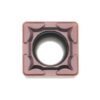
The TPKN1603PDTR features an indexable triangular shape with an 11-degree positive clearance. This geometry helps reduce cutting resistance. It also supports smoother material removal under suitable cutting conditions.
Compared with heavily negative cutting geometries, positive inserts generally require less cutting force. This advantage can help manufacturers machine stainless steel components with greater control. Lower cutting forces also reduce the risk of workpiece deflection in suitable setups.
The reinforced cutting edge provides additional support during milling. It helps maintain edge integrity and control burr formation. For manufacturers seeking reliable results, TPKN1603PDTR carbide inserts offer a practical option for controlled material removal.

2. Reduce Built-Up Edge During Stainless Steel Milling
Built-up edge remains a common problem in stainless steel machining. During cutting, workpiece material can adhere to the insert’s cutting edge. This accumulation changes the effective cutting geometry. When the material breaks away, it can leave irregular marks on the machined surface.
Heat and friction make this problem more difficult to control. Continuous production also exposes the cutting edge to repeated thermal and mechanical stress.
Bwin offers the TPKN1603PDTR insert in BM035 grade. This grade features a heat-resistant PVD coating. The coating helps resist built-up edge when machining 304, 316, and duplex stainless steels.
The micro-grain solid carbide substrate supports the cutting edge. Meanwhile, the PVD coating helps protect the cutting surface during operation. Together, these features support stable cutting performance in demanding applications.
However, coating performance alone does not determine tool life. Cutting speed, feed rate, coolant delivery, and workpiece material also affect the result. Operators should adjust these parameters to match the actual machining conditions.
3. Maintain Cutting Edge Stability with Micro-Grain Carbide
The carbide substrate influences an insert’s strength and wear behavior. A suitable substrate helps the cutting edge withstand mechanical stress. It also supports consistent performance during repeated machining cycles.
Bwin uses a micro-grain solid carbide substrate in its TPKN1603PDTR milling insert. This material provides a combination of hardness and strength. It helps the cutting edge withstand demanding stainless steel machining conditions.
The BM035 PVD coating complements the carbide substrate. Together, they help the insert handle heat and wear during milling. This combination matters in wet milling applications. Repeated temperature changes can place additional stress on the cutting edge.
Progressive wear can gradually affect surface finish and dimensional accuracy. Operators should therefore inspect the cutting edge regularly. Timely indexing or replacement helps maintain consistent machining results.

4. Support Stable Cutting in Continuous and Interrupted Milling
Continuous and interrupted milling create different cutting conditions. During continuous milling, the cutting edge maintains relatively regular contact with the workpiece. Interrupted milling creates repeated entry and exit cycles. These changes generate fluctuating mechanical and thermal loads.
An unsuitable insert may experience edge chipping or premature wear. Such damage can affect surface quality and create dimensional variation between workpieces.
The TPKN1603PDTR milling insert combines positive cutting geometry with a reinforced cutting edge. Its solid carbide construction supports stable cutting performance. The BM035 coating also helps resist wear during stainless steel machining.
However, insert selection represents only one part of the process. Machine rigidity, workpiece clamping, and tool overhang also influence stability. Operators should adjust feed rate and cutting depth to suit each application.
5. Maintain Quality in Face Milling and Square Shoulder Milling
Insert compatibility matters as much as cutting performance. The insert must match the cutter body and the intended machining operation. Incorrect seating or clamping can create unstable cutting conditions.
Bwin’s TPKN1603PDTR insert fits compatible modular face mill arbors and square shoulder cutter bodies. This format supports two common milling operations.
In face milling, stable cutting helps maintain surface quality across the machined area. In square shoulder milling, accurate insert positioning helps control shoulder geometry. Both operations require suitable cutting parameters and a rigid setup.
The triangular indexable design also gives operators access to available cutting edges. They should follow the manufacturer’s indexing recommendations. Clean insert pockets and secure clamping also help maintain repeatable performance.
6. Match the Insert Grade to the Workpiece Material
Material compatibility plays a major role in insert selection. Different stainless steel grades respond differently to cutting forces and heat. Manufacturers should consider these differences before choosing an insert grade.
The Bwin TPKN1603PDTR BM035 insert targets several stainless steel applications:
- 304 and 316 stainless steel: These grades commonly appear in food processing machinery, chemical equipment, and industrial components.
- Duplex stainless steel: Manufacturers use these materials in marine and chemical processing applications. They combine high strength with corrosion resistance.
- 17-4PH stainless steel: This precipitation-hardening grade serves mechanical components and industrial equipment.
- Other precipitation-hardening alloys: Manufacturers should confirm grade compatibility before machining.
Typical applications include food processing machinery, chemical valves, and marine hardware. The insert also supports other stainless steel component manufacturing tasks.
Operators can use compatible TPKN1603PDTR inserts on CNC machining centers and conventional milling machines. They must match the insert with a suitable cutter body.
The product specification states a feed rate of up to 0.12 mm per tooth. However, operators should not treat this value as universal. Workpiece material, cutting speed, depth of cut, cutter diameter, and machine rigidity all affect the suitable feed rate.

7. Practical Ways to Improve Machining Consistency
Even a suitable milling insert cannot compensate for a poor machining setup. Operators should check several details before starting production.
Check insert seating and clamping. Remove chips and debris from the insert pocket. Position the insert correctly and tighten it securely. Poor seating can create uneven cutting loads.
Monitor cutting edge wear. Inspect the insert for flank wear, chipping, and coating damage. Changes in surface finish or cutting sound may also indicate a problem.
Adjust cutting parameters. Match cutting speed, feed rate, and depth of cut to the workpiece material. Avoid excessive cutting loads.
Maintain coolant delivery. Keep coolant supply consistent during wet milling. Direct the coolant toward the cutting zone where the operation requires it.
Inspect workpiece dimensions. Check critical dimensions and surface quality at regular intervals. This helps identify process changes before they affect an entire batch.
These simple checks help reduce avoidable machining variation. They also support better tool management throughout production.
Why Choose Bwin TPKN1603PDTR Inserts?
Manufacturers need to evaluate more than insert dimensions when sourcing TPKN1603PDTR inserts. Cutting geometry, substrate properties, coating performance, and cutter compatibility all influence machining results.
Bwin combines an 11-degree positive clearance with micro-grain solid carbide construction. The BM035 grade adds a heat-resistant PVD coating. Together, these features help control cutting forces and resist built-up edge.
The insert supports compatible face milling and square shoulder milling setups. Its intended applications include 304, 316, duplex stainless steels, and specified precipitation-hardening alloys.
For manufacturers producing food processing machinery, chemical valves, and marine hardware, Bwin provides an application-focused milling insert option. It helps address the need for stable cutting performance and consistent machining quality.
Final Thoughts
Consistent machining quality depends on several connected factors. Insert geometry influences cutting forces. The carbide substrate supports edge strength. The coating helps manage wear and built-up edge.
Bwin’s TPKN1603PDTR milling insert combines these features for stainless steel milling applications. However, the right insert alone cannot guarantee consistent results. Operators must also maintain suitable cutting parameters and a stable machine setup.
By combining appropriate insert selection with regular tool inspection, manufacturers can improve process control. This approach helps maintain reliable machining quality across production runs.
Add comment