
What Are Cermet Inserts Used For?
In modern precision machining, cermet inserts play an increasingly important role because manufacturers demand higher surface quality, longer tool life, and more stable performance. As machining technology advances, industries actively replace traditional carbide tools with cermet-based solutions for finishing applications.
This article explains what cermet inserts are used for, how they perform in machining, and why engineers prefer them in steel and cast iron processing.
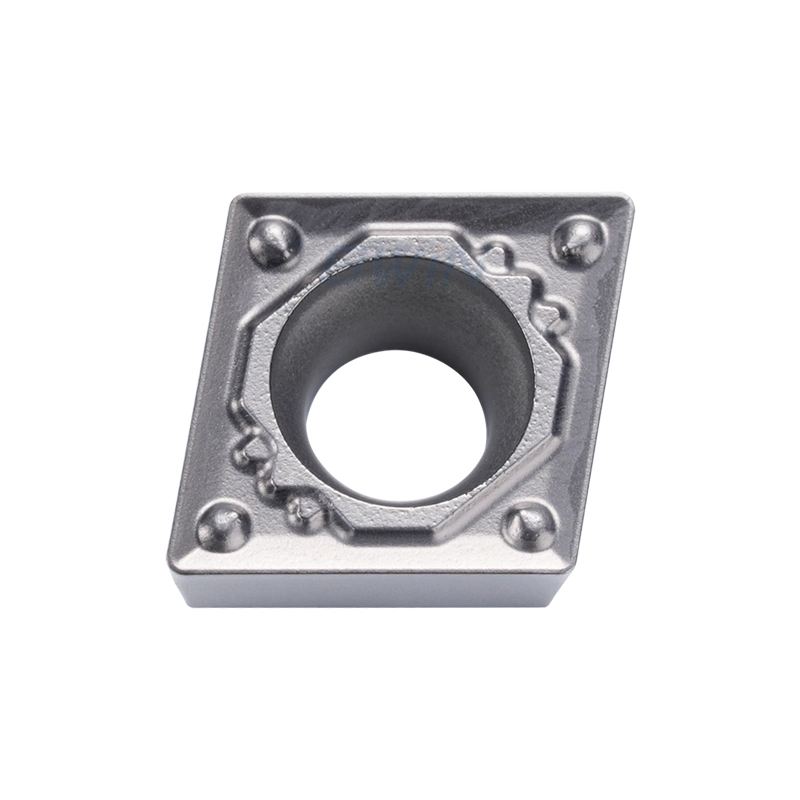
What Are Cermet Inserts?
Cermet inserts combine ceramic hardness with metallic toughness. As a result, they deliver a balanced cutting performance that supports both stability and durability.
Unlike traditional tools, cermet carbide inserts provide:
- High hardness for wear resistance
- Strong chemical stability during cutting
- Excellent heat resistance in high-speed machining
- Reduced tool adhesion during processing
Therefore, they perform especially well in finishing operations where surface quality matters.
What Are Cermet Inserts Used For?
Manufacturers mainly use cermet inserts for semi-finishing and finishing operations. In particular, they apply them when they need high precision and smooth surface finishes.
For example, they are widely used in:
- Steel component finishing
- Cast iron machining
- Automotive parts production
- Hydraulic system components
- Industrial machinery parts
In addition, cermet cutting tools help improve production consistency in mass manufacturing environments.

Why Cermet Cutting Tools Perform So Well
Cermet cutting tools offer several advantages over traditional carbide tools. First, they reduce built-up edge formation because they have low affinity with metal workpieces. As a result, machining becomes smoother and more stable.
Moreover, they maintain excellent performance under high temperatures. Therefore, they are suitable for continuous high-speed production.
Key advantages include:
1. Better Surface Finish
Cermet tools produce smoother and more precise surfaces compared to conventional inserts.
2. Strong Anti-Adhesion Performance
Because of their material structure, they prevent chip sticking and reduce built-up edge effectively.
3. High Wear Resistance
In addition, they resist abrasion well, which extends tool life significantly.
Applications of Cermet Turning Inserts
Manufacturers widely use cermet turning inserts in CNC lathe operations. For instance, they apply them in external turning, internal turning, and precision finishing.
They commonly process:
- Shaft components
- Bearing surfaces
- Automotive precision parts
Meanwhile, they help maintain stable machining quality in automated production lines.
Cermet Milling Inserts in Production
Engineers also use cermet milling inserts for high-speed milling applications. In particular, they perform well in finishing flat surfaces and precision geometries.
For example, they are used in:
- Mold finishing
- Structural metal parts
- Industrial components
As a result, manufacturers achieve better efficiency in CNC milling operations.
Cermet CNC Inserts in Modern Manufacturing
Today, cermet CNC inserts play an important role in smart factories. Because CNC systems require stable and repeatable performance, cermet tools fit these needs very well.
They help manufacturers:
- Improve cutting stability
- Maintain dimensional accuracy
- Reduce tool change frequency
Therefore, they support high-efficiency automated production.
Why Choose Bwin Cermet Inserts?
Bwin manufactures high-performance cermet carbide inserts designed for industrial machining applications. The company focuses on stability, precision, and long tool life.
Bwin cermet inserts deliver:
- Consistent finishing performance
- Strong wear resistance in steel and cast iron
- Stable machining under high-speed conditions
- Reliable quality for mass production
In addition, Bwin ensures strict production control to maintain consistent tool performance across batches.
Conclusion:
In summary, cermet inserts play a critical role in modern machining, especially in finishing and semi-finishing operations. Because they combine hardness, heat resistance, and chemical stability, they outperform many traditional cutting tools in precision manufacturing.
Cermet turning inserts, cermet milling inserts, and cermet CNC inserts all contribute to higher efficiency and better surface quality.
Therefore, industries that process steel and cast iron components increasingly rely on cermet cutting tools from manufacturers like Bwin to improve productivity and machining quality.
Add comment