
How to Improve Side Milling Results with a 4 Flute Carbide End Mill?
Side milling looks like a straightforward CNC operation: the side of an end mill removes material to create a vertical wall, shoulder, or defined profile. In practice, achieving a consistent result takes more than selecting the correct cutter diameter. Tool rigidity, cutting parameters, chip evacuation, and workpiece material all influence the final surface.
A 4 flute carbide end mill is commonly considered for side milling because its four cutting edges provide multiple contact points during machining. Combined with a solid carbide body and suitable flute geometry, it can support stable cutting in stainless steel, alloy steel, and carbon steel.
However, getting good results depends on how the tool is selected and used. Here are several practical factors manufacturers should consider when using a four-flute flat end mill for CNC side milling.
1. Choose the Right Flute Configuration for the Material
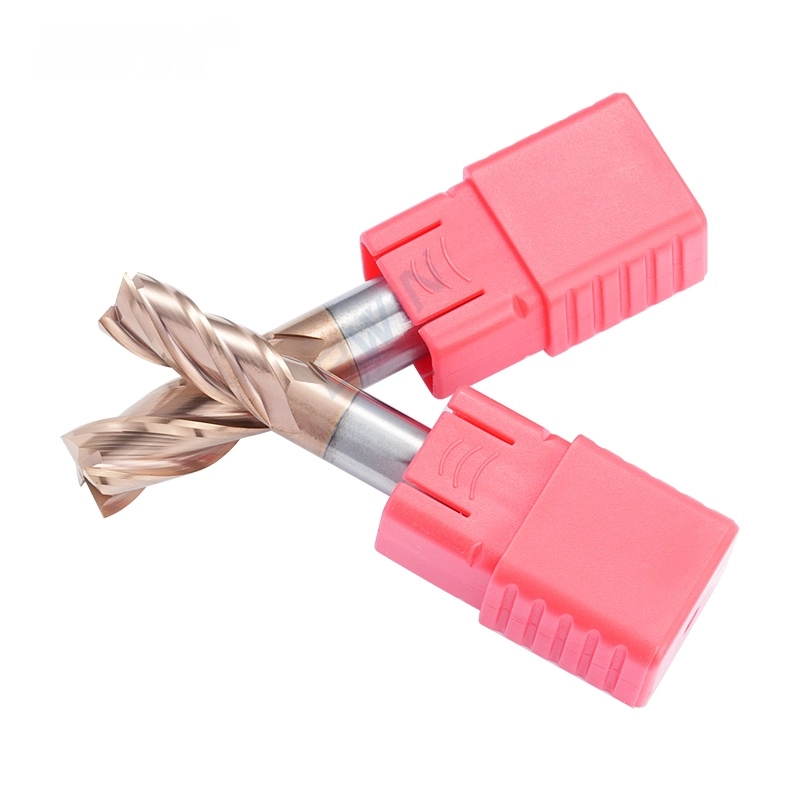
The number of flutes affects how an end mill cuts and how much space is available for chip removal. A four-flute end mill has more cutting edges than a two-flute design of comparable diameter, making it a common option for side milling and finishing operations.
Each cutting edge removes a portion of the material as the tool rotates. With an appropriate feed rate, the four-flute configuration can distribute the cutting workload across multiple edges and support consistent machining.
Material selection matters, too. Stainless steel, alloy steel, and carbon steel respond differently during milling. Stainless steel can generate considerable heat and may be prone to work hardening under unsuitable cutting conditions. Alloy steel varies in machinability depending on its composition and heat treatment, while carbon steel covers a broad range of grades.
For this reason, choosing a 4 flute carbide end mill should involve more than matching the flute count to the operation. The workpiece material, hardness, required finish, and machine capability all need to be considered.
2. Use Tool Rigidity to Maintain Stable Side Milling
Tool deflection is one of the problems that can affect side milling accuracy. When cutting forces push the end mill away from its intended path, the machined wall may become uneven or deviate from the required dimensions. Solid carbide end mills are valued for their rigidity and wear resistance. Their construction makes them suitable for demanding CNC machining applications where maintaining tool stability is important.
Tool rigidity also depends on the setup. A long tool overhang increases the risk of deflection, while poor clamping or excessive cutting loads can affect machining accuracy.
To maintain a stable cutting process:
- Keep tool overhang as short as the machining geometry allows.
- Use a suitable tool holder with secure clamping.
- Check tool runout before production.
- Avoid excessive radial engagement when the setup lacks rigidity.
- Make sure the workpiece is firmly secured.
These considerations are especially important when machining narrow walls, shoulders, and precision components.
3. Pay Attention to Chip Evacuation During Milling
Chip removal becomes increasingly important when machining materials such as stainless steel and alloy steel. Chips that remain around the cutting area may be recut, increasing heat and potentially affecting the machined surface.
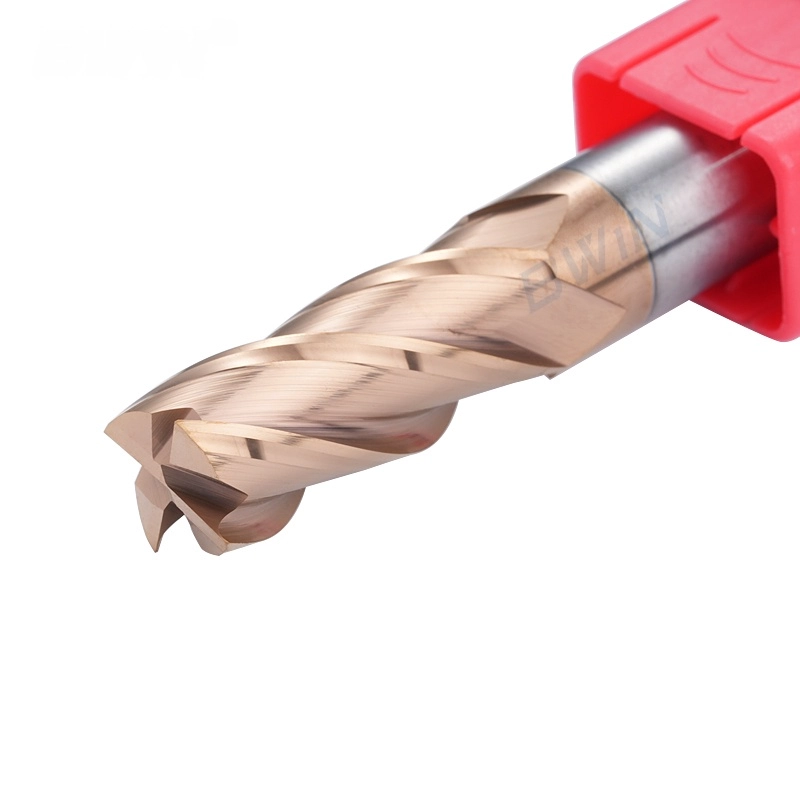
A four-flute end mill has less flute space than a comparable two-flute tool, so its suitability depends partly on the type of operation. During side milling, where chip evacuation is generally less restricted than in full-width slotting, a properly designed four-flute cutter can perform effectively.
The flute geometry also plays a role. Suitable flute design helps guide chips away from the cutting edges and reduces the chance of chip accumulation around the tool.
Machining conditions should support this process. Appropriate cutting depth, feed rate, and coolant or air-blast arrangements help prevent chips from interfering with the operation.
For deeper or more demanding cuts, machinists should pay particular attention to chip flow rather than assuming that a higher flute count automatically improves machining efficiency.
4. Adjust Cutting Parameters to the Workpiece Material
Even a high-quality carbide end mill can produce poor results when cutting parameters do not match the material or machining setup.
Cutting speed, feed rate, axial depth, and radial engagement work together to determine the load placed on the tool. Excessive cutting conditions may cause vibration, rapid wear, or poor surface quality. On the other hand, overly conservative parameters can reduce productivity and may contribute to rubbing instead of efficient cutting.
Different materials require different approaches.
Stainless steel: Heat management and work hardening deserve particular attention. Avoid allowing the tool to rub against the workpiece, and use cutting conditions recommended for the specific stainless steel grade.
Alloy steel: The material’s composition and hardness influence tool loading. Select cutting parameters according to the actual workpiece condition rather than treating all alloy steels as the same material.
Carbon steel: Machinability varies by grade and hardness. A suitable feed rate and cutting speed help maintain a consistent cutting process while controlling tool wear.
For production machining, it is better to start with the tool manufacturer’s recommended parameters and adjust them according to the machine, holder, workpiece, and required finish.
5. Select a Flat End Mill for the Required Surface Geometry
The shape of the cutting end determines which features a tool can produce effectively.
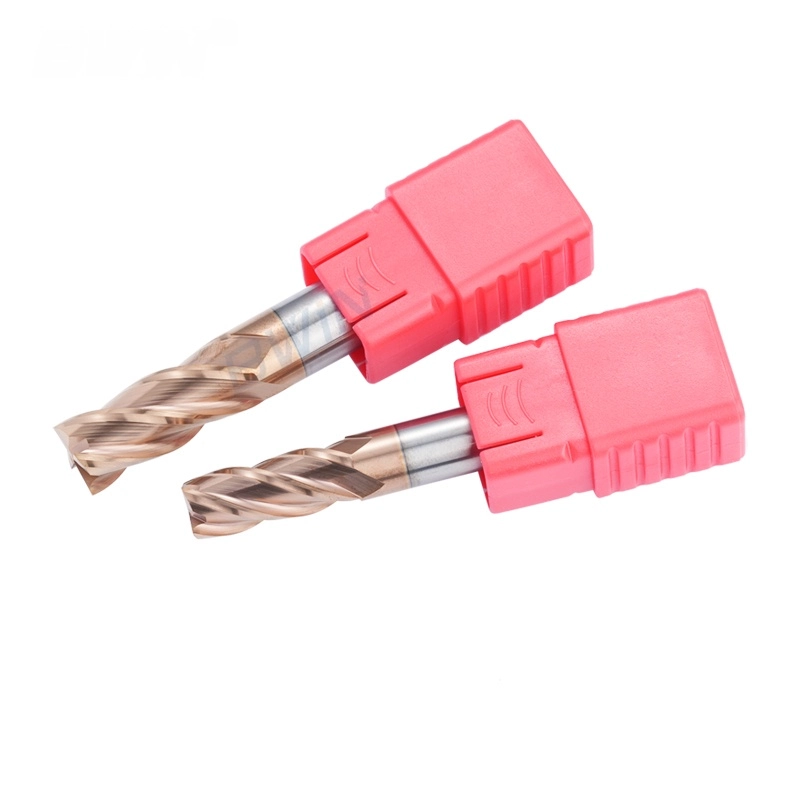
A flat end mill has a flat cutting tip and is widely used for machining flat surfaces, vertical walls, shoulders, and slots. During side milling, its peripheral cutting edges remove material along the side of the workpiece, making it suitable for producing straight profiles and defined edges.
A square end mill is another common name for a flat-ended cutter. The two terms are often used interchangeably when referring to tools with a square cutting profile.
For CNC machining, the correct diameter and cutting length should match the dimensions of the feature being produced. A tool that is too small may require additional passes, while an unnecessarily large cutter may not reach narrow features or internal corners.
Choosing the right 4 flute flat end mill helps balance accessibility, cutting stability, and machining efficiency.
6. Reduce Vibration to Improve Surface Finish
A visible improvement in surface quality often starts with controlling vibration. Chatter marks, uneven tool paths, and rough machining surfaces can result from an unstable combination of cutting forces, tool overhang, machine rigidity, and cutting parameters.
Four cutting edges do not eliminate vibration by themselves. The overall tool geometry and machining setup determine how smoothly the cutter engages the material.
If surface quality is inconsistent, check the following:
- Tool runout and clamping condition
- Tool overhang and cutting length
- Spindle speed and feed rate
- Radial and axial cutting engagement
- Workpiece rigidity and fixture stability
- Tool wear and cutting-edge condition
For finishing operations, a suitable radial engagement and consistent toolpath can help produce a more uniform surface. If the cutter shows signs of excessive wear or vibration, changing the tool alone may not solve the problem; the machining setup should also be reviewed.
7. Consider Tool Wear and Production Consistency
In continuous CNC production, tool wear affects more than the condition of the cutting edges. It can also influence dimensional accuracy, surface finish, and the frequency of tool replacement.
Solid carbide end mills offer good hardness and wear resistance, making them suitable for repeated machining operations. However, actual tool life depends on the workpiece material, cutting conditions, cooling method, tool geometry, and machine stability.
Regular inspection helps identify wear before it causes noticeable changes in the finished component. Signs such as edge chipping, abnormal noise, increased cutting resistance, and deteriorating surface quality should not be ignored.
For manufacturers producing repeated batches, monitoring tool condition and recording machining parameters can make it easier to maintain consistent results across production runs.
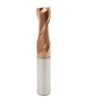
Bwin 4 Flute Carbide End Mills for CNC Milling
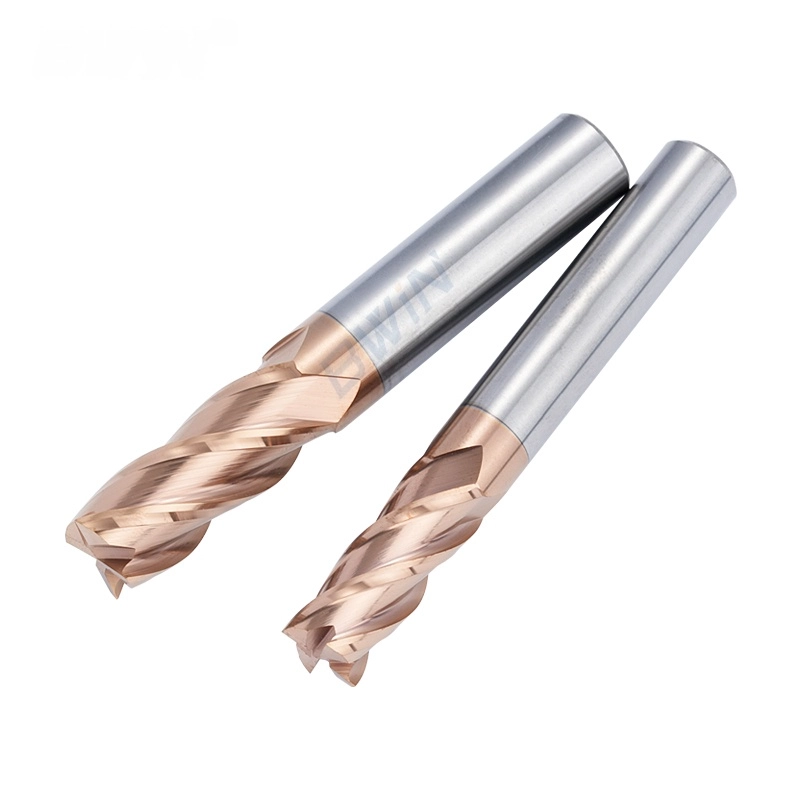
Bwin carbide end mills are designed for CNC machining applications involving stainless steel, alloy steel, and carbon steel.
The solid carbide construction provides rigidity and wear resistance for industrial milling, while the flat-end geometry supports slotting, side milling, and surface finishing. The four-flute configuration provides multiple cutting edges for machining operations where suitable chip clearance and stable tool engagement are required.
For mold manufacturing, precision parts production, and general metalworking, selecting the right cutter involves matching its diameter, cutting length, flute geometry, and machining conditions to the workpiece.
Whether the job involves producing a straight shoulder, machining a vertical wall, or finishing a steel component, Bwin offers carbide end mill options for different CNC milling requirements.
Final Thoughts
Good side milling results come from matching the cutting tool to the workpiece and machining conditions. A 4 flute carbide end mill can be a suitable choice for machining stainless steel, alloy steel, and carbon steel, particularly in side milling and finishing applications.
Tool rigidity, flute geometry, chip evacuation, and cutting parameters all contribute to the final result. By paying attention to these factors, manufacturers can improve machining consistency, control tool wear, and produce components that meet their dimensional and surface requirements. For CNC workshops and industrial buyers, choosing the right flat end mill is not simply about the number of flutes. It is about finding a tool that works reliably within the actual production process.
Add comment