
What Factors Affect NPT Thread Milling Tool Performance?
NPT thread milling cutter tools play an important role in producing high-precision pipe threads, especially in industries such as oil & gas, automotive, and mold manufacturing. NPT (National Pipe Taper) threads are widely used in North America and are known for their 60-degree cone pipe thread standard and 1:16 taper design.
To achieve stable performance and long tool life, understanding the key factors that influence machining results is essential. This article explains the main elements that affect performance when using an NPT thread mill, and how to optimize results in real production environments.
🔧 1. Tool Material: Carbide Quality Matters
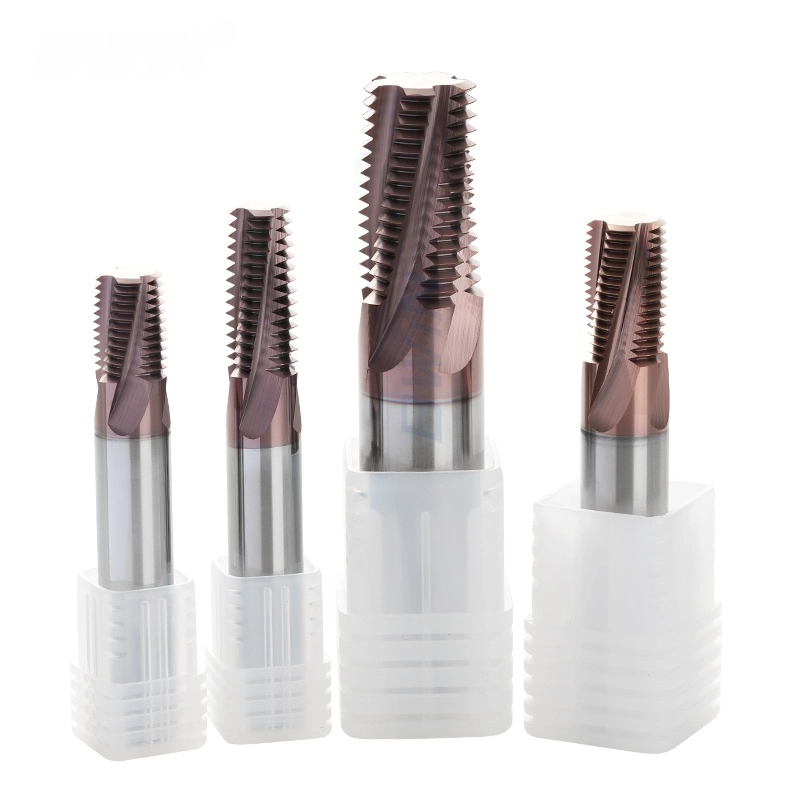
One of the most important factors is the material of the tool itself. A high-quality carbide thread mill offers superior hardness, wear resistance, and heat resistance compared to standard cutting tools.
Carbide tools help maintain sharp cutting edges during high-speed machining, especially when working with tough materials such as stainless steel or titanium alloys. Poor-quality carbide, however, may lead to chipping, reduced tool life, and unstable thread accuracy.
⚙️ 2. Workpiece Material Compatibility
The performance of an NPT thread milling cutter is strongly affected by the material being machined. Suitable materials include:
- 40Cr
- Cr12
- SUS stainless steel
- P20
- S136
- 718
- Manganese steel
- Titanium alloy
Each material has different hardness and cutting resistance. For example, stainless steel generates more heat, while titanium alloys require more stable cutting conditions. Matching the correct tool grade to the material is essential for optimal performance.
🌀 3. Internal Thread Machining Conditions
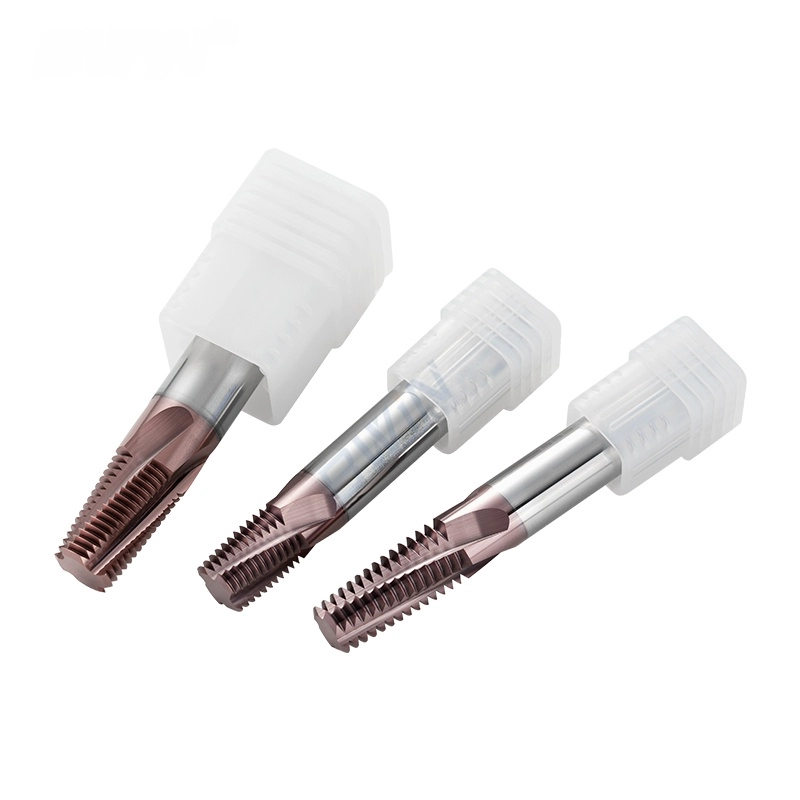
When performing internal threading, tool stability becomes even more critical. An internal NPT thread mill must operate inside a confined space, which increases cutting stress and chip evacuation difficulty.
Key factors include:
- Hole depth and diameter
- Chip removal efficiency
- Tool rigidity inside the bore
- Cooling and lubrication conditions
Poor chip evacuation can lead to tool breakage or poor surface finish, especially in deep hole machining.
🔩 4. Tool Geometry and Design
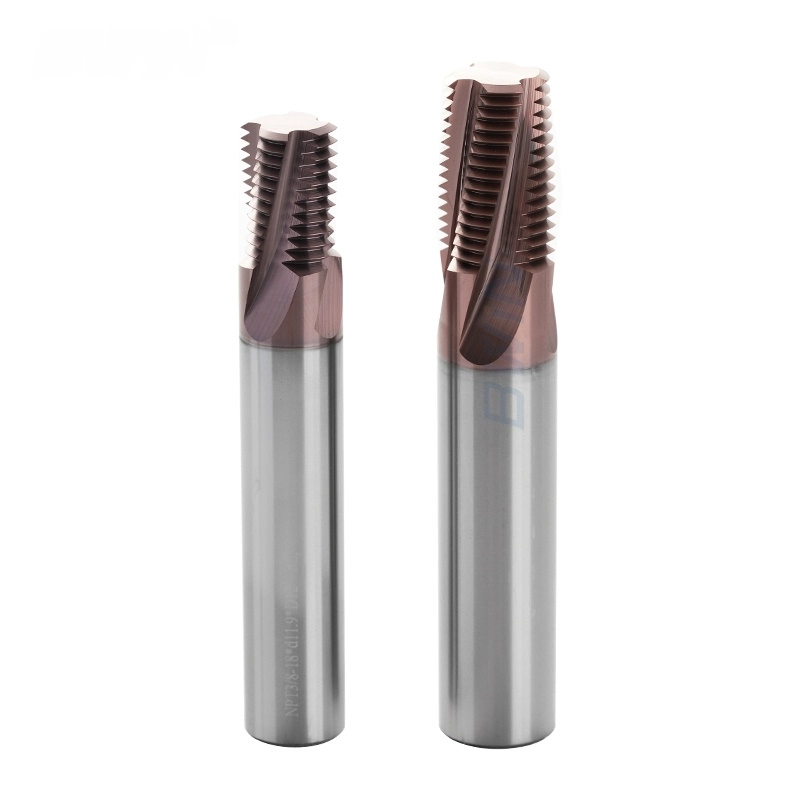
Advanced geometry design plays a major role in tool performance. High-quality NPT thread mills, such as those from Bwin, often feature:
- Professional forming groove design
- Enlarged core diameter for stability
- Anti-chipping cutting edge structure
- Optimized chip load distribution
These design features help reduce stress concentration inside the hole, improving tool strength and extending service life.
⚡ 5. Cutting Parameters and CNC Programming
Even the best tool will perform poorly if cutting parameters are incorrect. Important settings include:
- Spindle speed
- Feed rate
- Cutting depth per pass
- Helical interpolation strategy
Improper parameters can lead to vibration, poor thread accuracy, or tool wear. Proper CNC programming ensures smoother cutting and longer tool life.
💧 6. Cooling and Chip Control
Efficient cooling is essential for NPT thread milling cutter performance. High-speed machining generates significant heat, especially in deep or internal threading.
Good coolant flow helps:
- Reduce cutting temperature
- Improve surface finish
- Extend carbide tool life
- Prevent chip welding
Chip evacuation is equally important, particularly in internal threading applications.
🏭 Bwin NPT Thread Mill Performance Advantage
As a professional NPT thread mill manufacturer, Bwin focuses on delivering high-performance thread milling solutions for industrial applications.
Bwin thread mills are designed with:
- High-quality carbide substrate
- Precision forming groove design
- Large core diameter for strength
- Anti-breakage structure for deep hole stability
- Long tool life and consistent wear resistance
These features ensure stable performance even under demanding machining conditions.
Whether used as a carbide thread mill for external threading or an internal NPT thread mill for deep hole applications, Bwin tools are engineered for durability, accuracy, and efficiency.
📌 Final Thoughts
The performance of an NPT thread milling cutter depends on multiple factors, including tool material, workpiece type, internal machining conditions, tool design, and cutting parameters.
By selecting a high-quality carbide thread mill from a professional supplier like Bwin, manufacturers can significantly improve machining stability, reduce tool wear, and achieve high-precision NPT threads consistently.
In modern CNC production, optimizing these factors is key to maximizing efficiency and ensuring long-term tool performance.
Add comment