
How Can Insert Wear Affect Surface Finish in CNC Milling Operations?
In CNC milling, surface finish depends on more than machine accuracy and cutting parameters. The condition of the milling insert also plays an important role. As the cutting edge wears, it can leave marks on the workpiece, affect dimensional consistency, and increase the need for additional finishing operations.
This issue becomes more noticeable when machining stainless steel and other difficult-to-cut materials. Heat, cutting forces, and interrupted contact can accelerate insert wear. Understanding these changes helps manufacturers maintain machining quality and select suitable carbide milling inserts for demanding applications.
1. How Does Insert Wear Change the Milled Surface?
Insert wear develops gradually, but its effects can appear on the workpiece quite quickly. Different wear patterns create different surface problems.
Flank wear develops along the clearance face of the insert. As the worn area grows, the cutting edge loses its original geometry. The insert may rub against the machined surface instead of cutting cleanly. This can increase surface roughness and affect dimensional accuracy.
Crater wear forms on the rake face. It often develops when high temperatures and chip friction affect the cutting area. As the crater becomes deeper, the cutting edge may lose strength and become more vulnerable to damage.
Edge chipping creates small breaks along the cutting edge. Even minor damage can leave visible marks on the workpiece. In severe cases, it can cause inconsistent cutting results.
Built-up edge creates another challenge, especially when machining stainless steel. Workpiece material can adhere to the cutting edge during machining. When this material breaks away, it may pull small fragments from the surface and reduce finish consistency.
2. Why Does Stainless Steel Milling Require Careful Insert Selection?
Stainless steel presents several challenges during CNC milling. Materials such as 304 and 316L can generate considerable heat and resist cutting. Duplex stainless steel, including 2205, also requires suitable cutting tools and machining conditions.
The cutting edge must handle repeated contact without losing its geometry too quickly. Interrupted cuts can make this more difficult. Each entry and exit creates changes in cutting force and temperature.
For this reason, manufacturers should consider more than insert hardness when choosing stainless steel milling inserts. Substrate quality, coating performance, edge geometry, and chip evacuation all influence machining results.
A suitable insert helps maintain a more consistent cutting action. However, the final surface finish still depends on feed rate, cutting speed, machine rigidity, and workpiece stability.
3. How Do Carbide Substrate and PVD Coating Affect Insert Wear?
The carbide substrate provides the cutting edge with its basic strength and wear resistance. A suitable balance between hardness and toughness helps the insert withstand cutting pressure.
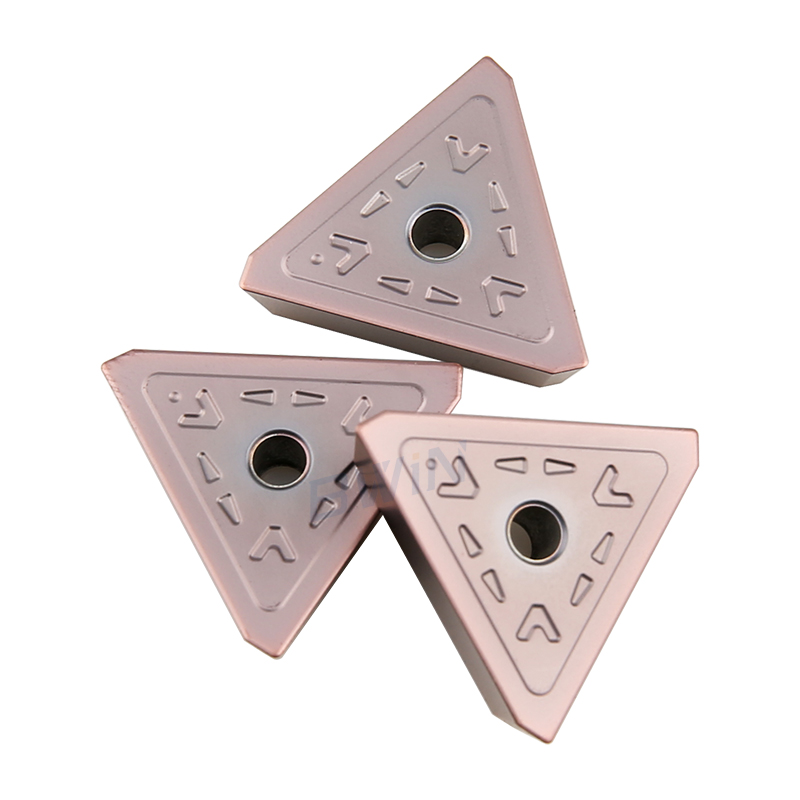
Coating technology adds another layer of protection. Bwin’s TPKN2204PDTR inserts use Grade BM035 with a micro-thin PVD coating. This coating is designed to resist thermal cracking in demanding stainless steel milling applications.
During interrupted wet cutting, temperature changes can place additional stress on the cutting edge. A suitable PVD coating helps the insert handle these conditions. It also helps suppress built-up edge under the specified machining conditions.
However, coating alone cannot prevent every type of wear. Incorrect cutting parameters, poor chip evacuation, or excessive vibration can still damage the insert.
4. Why Does Insert Geometry Matter for Surface Finish?
Insert geometry affects how the cutting edge enters the material and forms chips. It also influences cutting resistance and the forces acting on the insert.
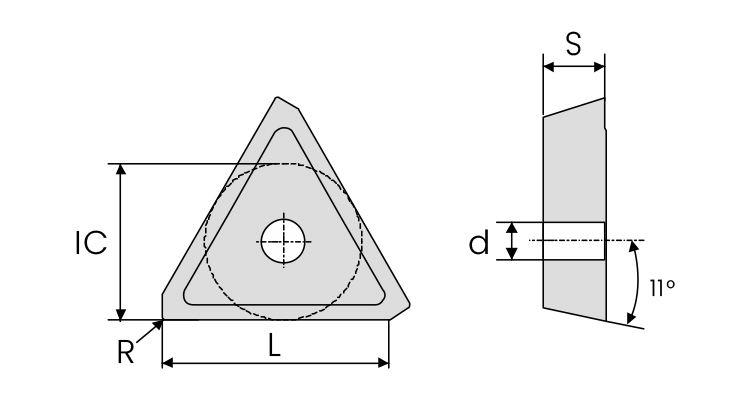
The Bwin TPKN2204PDTR carbide milling insert features a heavy-duty 22 mm triangular profile and an 11-degree positive clearance angle. Its positive cutting geometry helps shear stringy stainless steel chips.
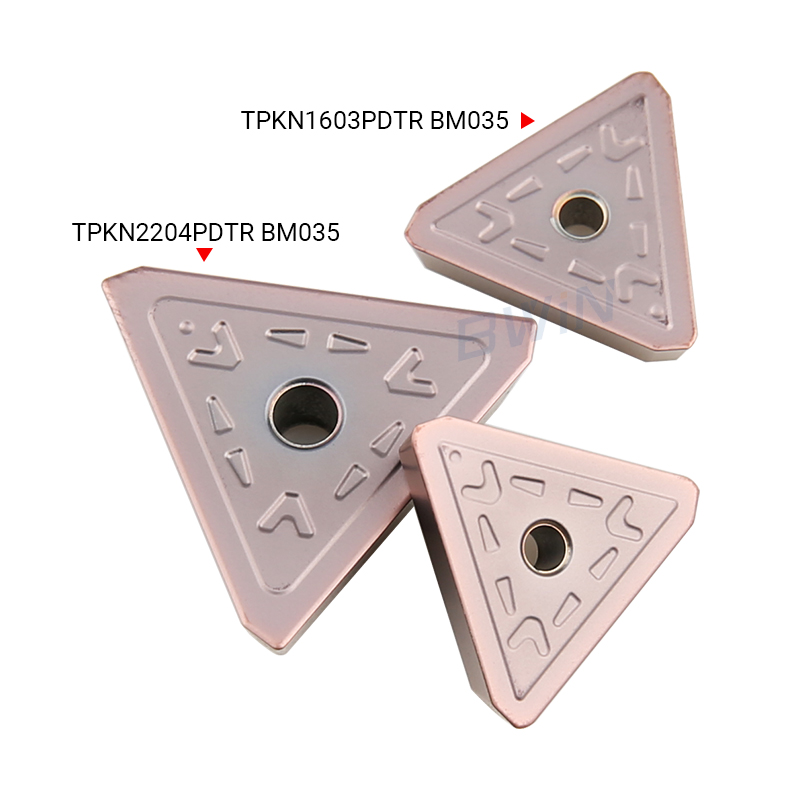
The insert also has a 4.76 mm cross-section. This thicker structure provides greater support than smaller 1603 tips. It suits demanding face milling operations where the cutting edge must withstand substantial mechanical loads.
These structural features make the insert suitable for heavy roughing and semi-finishing. They also help manufacturers address machining challenges in applications that require a robust cutting edge.
5. What Should Manufacturers Check During CNC Milling?
Even a suitable insert needs the right machining conditions. Operators should monitor several factors to reduce unnecessary wear and maintain surface quality.
Cutting speed and feed rate: Excessive cutting speed can increase heat at the cutting edge. An unsuitable feed rate can also affect chip formation and surface texture. Operators should follow the recommended cutting data and adjust parameters according to the material and machine setup.
Axial depth of cut: A larger depth of cut increases the load on the insert. The TPKN2204PDTR format supports axial depths of cut up to 8.0 mm per pass under suitable conditions. Actual performance depends on machine rigidity, cutter configuration, material, and cutting parameters.
Chip evacuation: Long or tangled chips can interfere with the cutting process. Proper chip evacuation helps prevent chips from damaging the machined surface or interfering with the cutting edge.
Insert inspection: Operators should inspect the cutting edge at regular intervals. Look for flank wear, chipping, crater wear, and built-up material. Replacing a damaged insert at the right time helps prevent further surface defects.
Machine stability: Vibration can accelerate edge damage and leave visible patterns on the workpiece. A rigid setup and secure workpiece clamping help maintain consistent cutting conditions.
6. Where Can TPKN2204PDTR Milling Inserts Be Used?
Bwin’s TPKN2204PDTR carbide milling inserts target demanding milling operations on rigid machining centers and high-torque CNC equipment. Their design also suits floor-type boring mills.
Typical workpiece materials include:
- 304 and 316L stainless steel
- 2205 duplex stainless steel
- Precipitation-hardening alloys
These materials appear in offshore oil equipment, heavy chemical reactors, and naval valve bodies. Such components often require reliable machining performance during heavy roughing and semi-finishing.
The 22 mm triangular profile, solid carbide substrate, and BM035 PVD coating make this insert a practical option for these applications. Manufacturers should still match the insert to the cutter body, workpiece material, and machine capacity.
Conclusion
Insert wear directly affects CNC milling surface finish. Flank wear, crater wear, edge chipping, and built-up edge can all change how the cutting edge interacts with the workpiece.
Choosing suitable CNC milling inserts is one part of controlling these problems. Manufacturers should also pay attention to insert geometry, coating technology, cutting parameters, chip evacuation, and machine stability.
For demanding stainless steel applications, Bwin’s TPKN2204PDTR inserts combine a heavy-duty triangular profile with a solid carbide substrate and BM035 PVD coating. Matching these features with the correct machining conditions helps manufacturers manage insert wear and maintain more consistent milling results.
Add comment