
DCMT vs CCMT: Why Does Insert Geometry Matter in CNC Turning?
Although many turning inserts may appear similar, differences in insert geometry can significantly affect cutting force, chip control, tool life, and machining efficiency.
Among various CNC turning inserts, DCMT and CCMT inserts are two widely used solutions for precision turning applications. Both are designed for indexable tooling systems, but their different geometries make them suitable for different machining conditions.
So, DCMT vs CCMT: why does insert geometry matter in CNC turning?
The answer lies in how insert shape, cutting edge design, and positive geometry influence machining performance.
As a professional carbide insert manufacturer, Bwin provides high-performance turning inserts designed to help manufacturers achieve reliable and efficient CNC machining results across different industries.
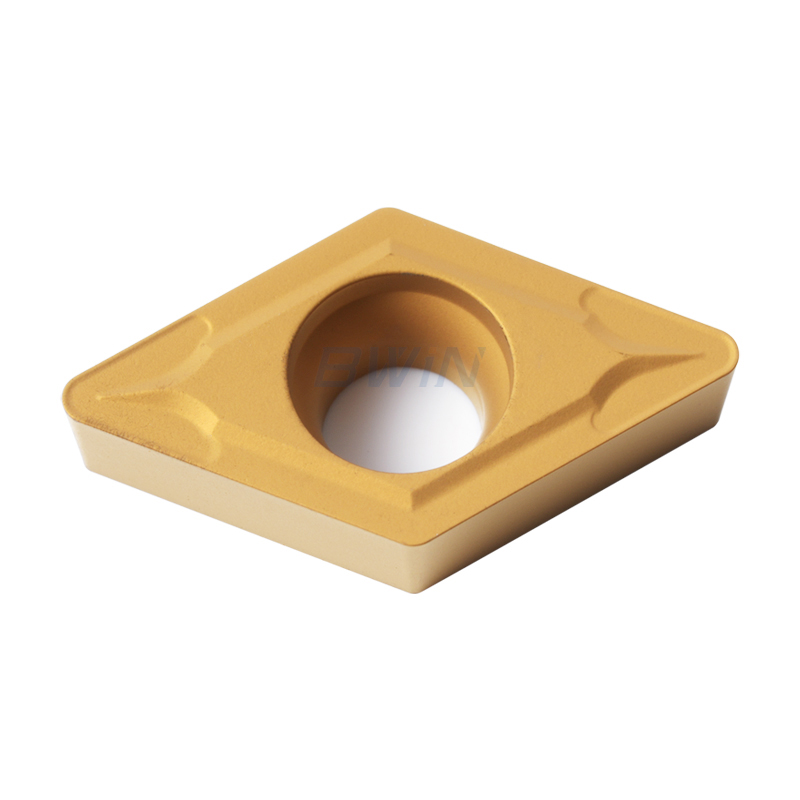
What Are DCMT and CCMT Turning Inserts?
Before comparing DCMT and CCMT inserts, it is important to understand their basic characteristics.
Both DCMT and CCMT are positive geometry carbide turning inserts commonly used in CNC lathes and turning centers.
They are manufactured from cemented carbide materials, providing:
- Excellent wear resistance
- High cutting stability
- Good heat resistance
- Long service life during continuous machining
These inserts are widely used for processing:
- Carbon steel
- Alloy steel
- Stainless steel
- Cast iron
- Other metal materials
The main difference between DCMT and CCMT inserts comes from their geometry, including insert shape, clearance angle, and cutting edge configuration. These differences directly affect machining performance and application suitability.
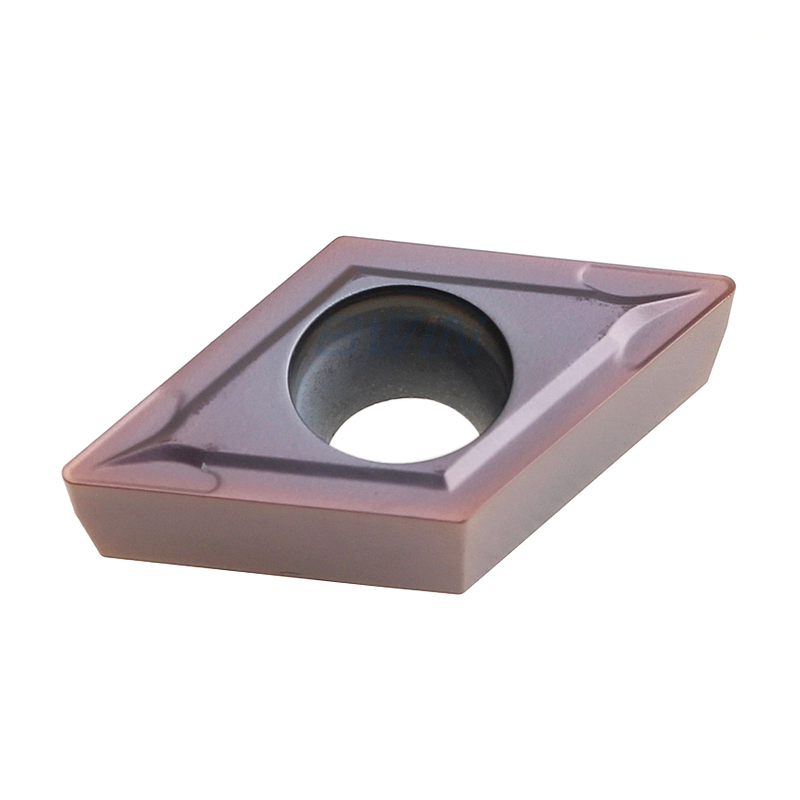
What Are DCMT Carbide Turning Inserts?
DCMT carbide turning inserts feature a 55° diamond-shaped geometry with a positive cutting angle.
This geometry provides a sharp cutting edge and reduces cutting resistance, making DCMT inserts suitable for precision turning applications.
The advantages of DCMT inserts include:
- Lower cutting forces
- Excellent surface finish
- Good chip evacuation
- High machining accuracy
Because of their sharp cutting edge, DCMT inserts are commonly used for:
- Precision finishing
- Light cutting operations
- Small component machining
- Complex profile turning
DCMT inserts are especially suitable when manufacturers need accurate dimensions and smooth surface quality.
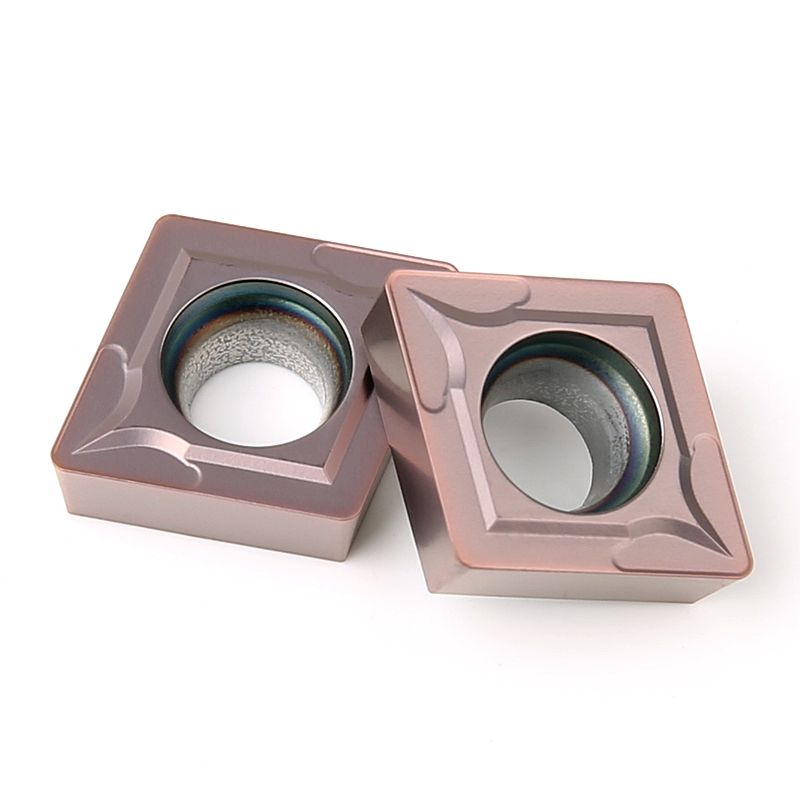
What Are CCMT Carbide Turning Inserts?
CCMT carbide turning inserts feature a 80° diamond-shaped geometry with a positive cutting angle.
Compared with DCMT inserts, CCMT inserts provide a stronger cutting edge and better versatility for general machining applications.
The CCMT carbide turning insert uses a precision-ground carbide substrate designed to resist:
- Wear
- Heat deformation
- Edge chipping
during continuous CNC turning operations.
The positive geometry helps:
- Reduce cutting force
- Improve chip flow
- Maintain stable cutting performance
Bwin CCMT inserts are available in various sizes, including:
- CCMT060202
- CCMT060208
- CCMT09T304
- CCMT09T308
- CCMT120404
- CCMT120408
These options allow manufacturers to select suitable inserts based on different machining requirements.
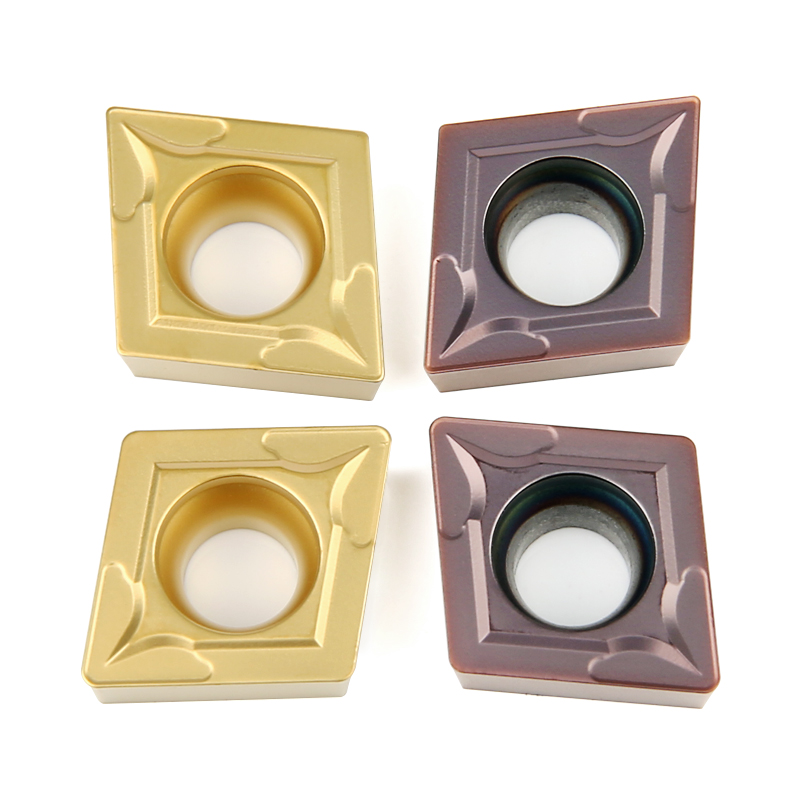
DCMT vs CCMT: What Are the Main Geometry Differences?
The geometry of a turning insert determines how cutting forces are distributed and how the tool interacts with the workpiece.
1. Insert Shape and Cutting Edge Strength
The biggest difference between DCMT and CCMT inserts is their shape.
DCMT Insert Geometry
DCMT uses a 55° diamond shape.
This design provides:
- A sharper cutting edge
- Better accessibility for detailed machining
- Lower cutting resistance
It is suitable for precision machining where surface finish is a priority.
CCMT Insert Geometry
CCMT uses an 80° diamond shape.
This design provides:
- A stronger cutting edge
- Better impact resistance
- Higher machining stability
It is suitable for general turning applications and medium cutting conditions.
How Does Insert Geometry Affect Cutting Performance?
Insert geometry directly influences several important machining factors.
Cutting Force
A sharper insert geometry reduces cutting resistance.
DCMT inserts create lower cutting forces, making them suitable for:
- Thin-wall components
- Small precision parts
- Finishing operations
CCMT inserts provide stronger cutting stability and are better suited for heavier machining tasks.
Chip Control
Effective chip evacuation is essential for stable CNC turning.
Poor chip control may cause:
- Surface damage
- Tool damage
- Production interruptions
The positive geometry of Bwin CCMT carbide inserts helps guide chips away from the cutting edge, improving machining stability during continuous operations.
Surface Finish Quality
Surface finish is a key factor in precision manufacturing.
DCMT inserts are often preferred for finishing because the sharp cutting edge helps achieve smoother surfaces.
CCMT inserts also provide reliable finishing performance while offering greater versatility for both roughing and finishing operations.
Applications: When Should You Choose DCMT or CCMT?
Choosing between DCMT and CCMT depends on machining requirements, material type, and production conditions.
Choose DCMT Inserts When You Need:
- High precision machining
- Excellent surface finish
- Low cutting force
- Detailed component processing
Typical applications include:
- Precision mechanical parts
- Small automotive components
- Complex profiles
- Finishing operations
Choose CCMT Inserts When You Need:
- Strong cutting performance
- General-purpose machining
- Better edge strength
- Stable production efficiency
Typical applications include:
- Automotive parts
- Machinery components
- Mold manufacturing
- Hydraulic components
- Aerospace parts
- Railway equipment
Bwin CCMT carbide inserts work effectively with:
- CNC lathes
- Turning centers
- Automatic machining equipment
They provide stable performance in both roughing and finishing operations.
Why Does Insert Geometry Matter for CNC Turning Efficiency?
For manufacturers, choosing the correct insert geometry can directly influence:
Longer Tool Life
Proper geometry reduces unnecessary cutting stress and helps prevent premature tool failure.
Better Machining Accuracy
Stable cutting performance helps maintain consistent dimensions during long production cycles.
Lower Production Costs
Longer tool life and fewer insert changes reduce downtime and improve machining efficiency.
Improved Surface Quality
Optimized cutting geometry helps manufacturers achieve better surface finishes with fewer secondary processes.
Therefore, insert geometry is not simply a design feature—it is a key factor affecting overall CNC turning performance.
Why Choose Bwin CNC Turning Inserts?
As an experienced carbide insert manufacturer, Bwin focuses on developing reliable cutting solutions for modern machining industries.
Bwin carbide turning inserts are manufactured using high-quality cemented carbide materials and precision production processes to ensure:
- Excellent wear resistance
- Stable cutting performance
- Accurate machining results
- Consistent surface finishes
Bwin provides a wide range of CNC turning inserts for different machining applications, including:
- DCMT inserts
- CCMT inserts
- Indexable carbide inserts
- Custom carbide tooling solutions
Whether manufacturers require precision finishing or stable production machining, Bwin provides professional solutions to improve machining efficiency and reduce operating costs.
Conclusion:
When comparing DCMT vs CCMT turning inserts, insert geometry plays a critical role in determining cutting performance. DCMT inserts are ideal for precision machining applications that require lower cutting force and excellent surface finish. CCMT inserts provide stronger cutting stability and greater versatility for general CNC turning operations. Understanding the differences in insert geometry allows manufacturers to select the right tool for each application, improving productivity, tool life, and machining quality. With high-performance DCMT and CCMT carbide turning inserts, Bwin helps global manufacturers achieve reliable and efficient CNC machining performance.
Add comment