
What Factors Determine the Quality of CCMT Carbide Turning Inserts?
In CNC machining, the cutting tool directly affects machining efficiency, surface quality, and production costs. Even with advanced CNC equipment, a low-quality turning insert can lead to unstable cutting, frequent tool replacement, and inconsistent finished parts.
Among various CNC cutting tools, the CCMT carbide turning insert is widely used because of its positive cutting geometry, reliable performance, and ability to handle different metal materials.
However, choosing a suitable CCMT insert is not only about selecting the right model or size. The real performance depends on several factors, including carbide material, edge design, manufacturing accuracy, coating technology, and application compatibility. For manufacturers working with carbon steel, stainless steel, alloy steel, and cast iron, understanding these factors helps improve machining efficiency and reduce unnecessary production costs. As a professional cutting tool brand, BWIN provides high-performance CCMT carbide turning inserts designed for stable CNC turning operations and various industrial machining requirements.
1. Carbide Substrate Quality Is the Foundation of Insert Performance
The carbide substrate is one of the most important factors determining the service life of a CCMT carbide turning insert.
During continuous CNC turning, the insert is exposed to high cutting temperatures, strong friction, and repeated mechanical stress. A high-quality carbide substrate needs to maintain sufficient hardness while also providing enough toughness to prevent cracking or edge breakage.
A well-balanced carbide material helps the insert achieve:
- Better wear resistance during long machining cycles
- Improved thermal stability under high cutting speeds
- Reduced risk of edge chipping
- More consistent cutting performance
BWIN CCMT inserts use precision carbide substrates to support stable machining performance, especially in demanding industrial environments.
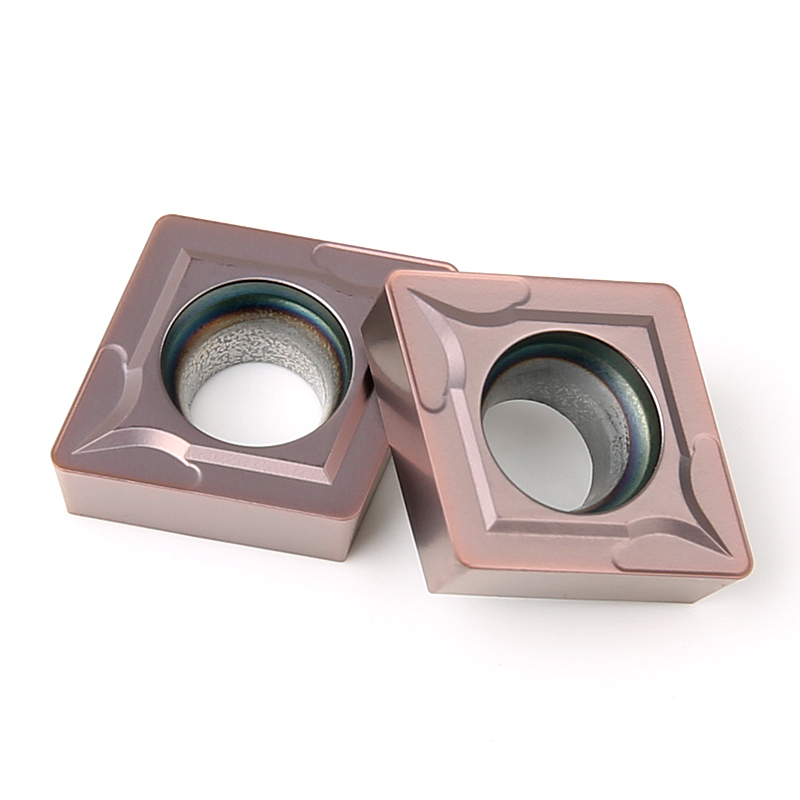
2. Insert Geometry Directly Influences Cutting Performance
The geometry of a CCMT turning insert plays a major role in how smoothly the cutting process works.
Unlike negative inserts that require higher cutting force, CCMT inserts usually feature positive geometry. This design reduces the contact area between the cutting edge and workpiece, which helps lower cutting resistance.
The advantages include:
- Lower cutting force requirements
- Smoother chip evacuation
- Reduced vibration during machining
- Improved surface finish
For CNC turning applications where accuracy and stability are important, the correct insert geometry can significantly influence the final machining result.
3. Manufacturing Precision Determines Machining Consistency
In large-scale production, consistency is just as important as cutting performance.
A high-quality CCMT carbide insert requires precise control during manufacturing. Small dimensional differences may affect tool positioning, cutting stability, and finished part accuracy.
Important manufacturing factors include:
- Accurate insert dimensions
- Consistent cutting edge preparation
- Precise tolerance control
- Stable tip positioning
BWIN focuses on manufacturing accuracy to ensure each CCMT insert delivers consistent performance during repeated machining operations. This is especially important for industries such as automotive manufacturing and precision machinery production, where every component requires reliable dimensional accuracy.
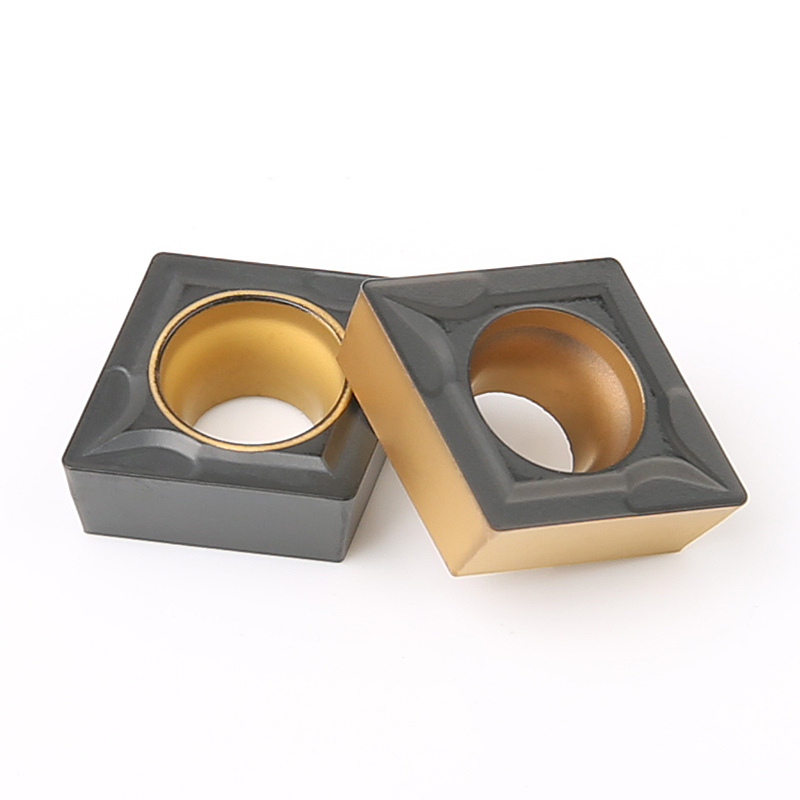
4. Coating Technology Improves Tool Life
During CNC turning, heat and friction are unavoidable. Without proper protection, the cutting edge can quickly wear out.
The coating layer on a carbide turning insert helps improve resistance against wear and high temperatures. Different coating solutions are designed for different machining materials and cutting conditions.
A suitable coating can provide:
Better Wear Resistance
The coating reduces direct friction between the insert and workpiece, extending tool life.
Higher Thermal Stability
It helps the insert maintain performance during high-speed cutting operations.
More Stable Surface Quality
A sharper and more stable cutting edge helps achieve consistent surface finishes. For manufacturers machining steel, stainless steel, and alloy materials, selecting the right coated CCMT insert can greatly improve production efficiency.
5. Cutting Edge Strength Affects Reliability
The cutting edge is the part that directly performs material removal, making its strength critical.
During roughing operations, the insert must withstand heavy cutting forces. During finishing operations, it needs to maintain sharpness and accuracy.
A reliable CCMT carbide turning insert should provide a good balance between:
- Edge strength
- Cutting sharpness
- Wear resistance
- Machining stability
BWIN CCMT inserts are designed to support both roughing and finishing operations, helping manufacturers achieve stable performance across different machining conditions.
6. Correct Insert Size Improves Machining Results
Different machining tasks require different insert sizes. Selecting the correct specification helps optimize cutting performance and avoid unnecessary tool stress.
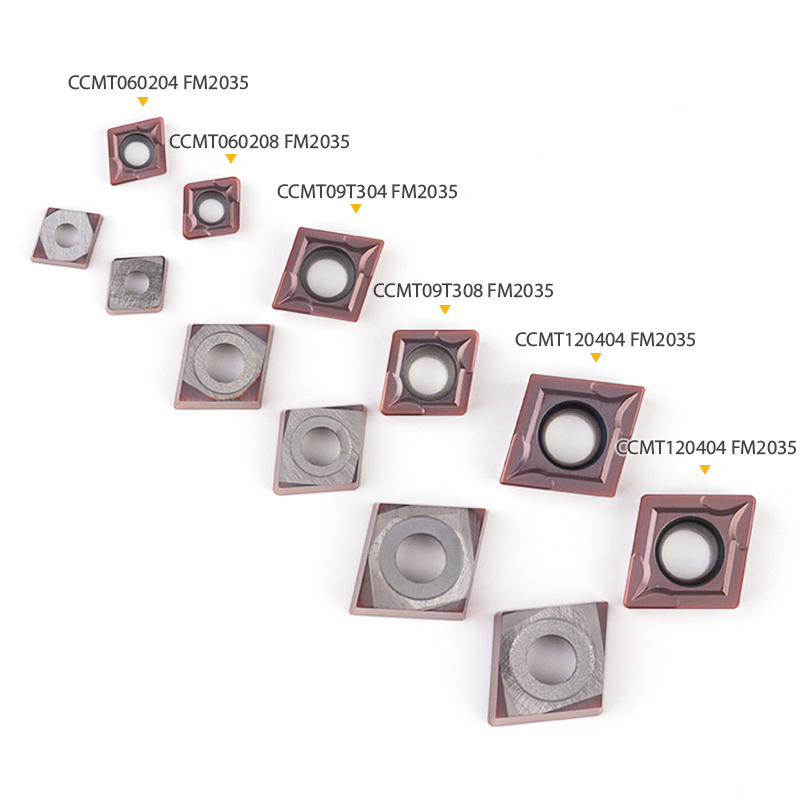
BWIN provides multiple CCMT insert sizes, including:
- CCMT060202
- CCMT060208
- CCMT09T304
- CCMT09T308
- CCMT120404
- CCMT120408
Smaller inserts are commonly used for precision machining, while larger sizes provide better strength for heavier cutting operations. The correct insert size should match the machine capability, cutting depth, feed rate, and workpiece requirements.
7. Material Compatibility Determines Application Success
A good CCMT turning insert should not only provide durability but also match different machining materials.
BWIN carbide inserts are suitable for processing:
- Carbon steel
- Alloy steel
- Stainless steel
- Cast iron
- Other ferrous materials
Different materials create different machining challenges. For example, stainless steel has high toughness and tends to generate more heat during cutting, requiring inserts with excellent wear resistance and edge stability. Choosing the correct insert grade and cutting parameters helps manufacturers achieve longer tool life and better surface quality.
8. Reliable Quality Control Ensures Stable Performance
For industrial buyers, product consistency is often more important than a single test result.
A professional CCMT insert manufacturer should have strict quality control procedures, including:
- Dimension inspection
- Carbide material testing
- Cutting edge inspection
- Coating quality inspection
- Performance verification
These processes ensure that every batch of inserts maintains stable performance. BWIN applies quality management throughout production to provide dependable carbide cutting tools for global CNC machining customers.
Where Are CCMT Carbide Turning Inserts Used?
Due to their flexibility and reliability, CCMT carbide turning inserts are widely used in various industries.
Automotive Parts Manufacturing
Used for machining shafts, engine components, and precision metal parts.
Machinery Manufacturing
Suitable for producing mechanical components with high dimensional requirements.
Mold Production
Supports accurate machining of complex metal parts.
Hydraulic Components
Provides stable cutting performance for durable industrial components.
Aerospace and Railway Equipment
Used in applications requiring precision machining and consistent quality.
How to Select the Right CCMT Carbide Turning Insert?
When purchasing a CCMT carbide turning insert, manufacturers should consider several practical factors:
Workpiece Material
Different metals require different insert performance characteristics.
Machining Conditions
Cutting speed, feed rate, and cutting depth influence insert selection.
Processing Requirements
Roughing and finishing operations usually require different insert solutions.
Supplier Capability
A reliable supplier should provide stable quality, technical support, and customized solutions.
Conclusion: Quality Determines the Value of CCMT Inserts
The quality of a CCMT carbide turning insert is determined by multiple factors, including carbide substrate, insert geometry, manufacturing precision, coating technology, and application compatibility.
A well-designed insert can help manufacturers achieve longer tool life, better surface finish, and more stable CNC machining performance. With professional manufacturing experience and strict quality control, BWIN provides reliable CCMT carbide turning inserts for CNC lathes, turning centers, and industrial machining applications. For manufacturers seeking efficient and stable machining solutions, selecting the right CCMT insert is an important step toward improving productivity and reducing operating costs.
Add comment