
Why Does a Corner Rounding End Mill Wear Faster Than Expected?
A corner rounding end mill is often chosen when an internal radius needs to be clean, consistent, and repeatable. In a production environment, however, the cutter may start showing wear much earlier than expected. The radius becomes less consistent, the surface finish starts to change, and the operator may find that the tool needs to be replaced long before the planned tool life.
It is easy to assume that the problem is the cutter itself. In many cases, that is not where the problem starts.
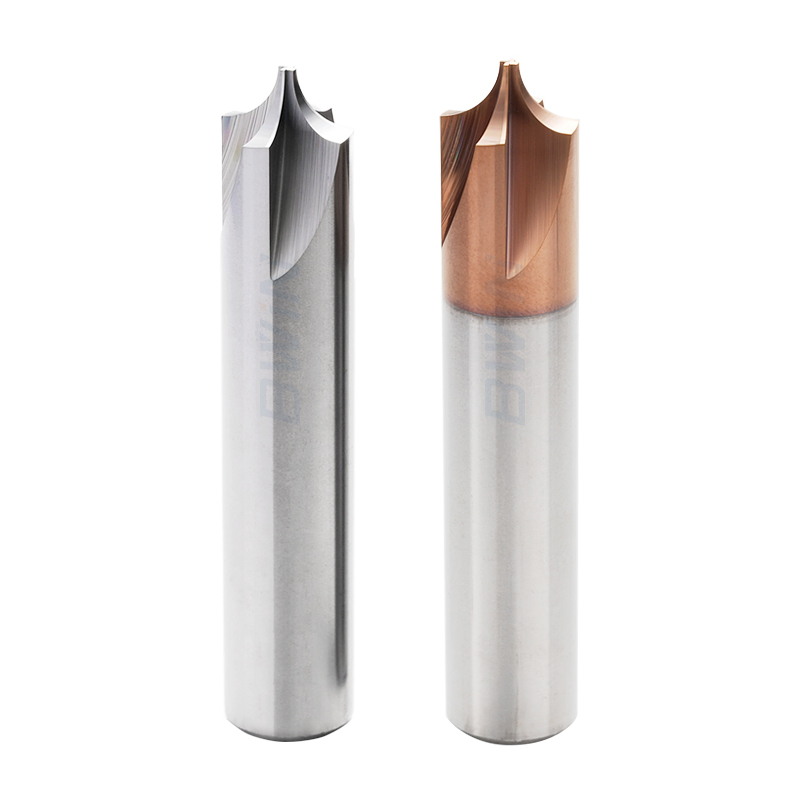
A carbide corner rounding end mill, also known as an inner R end mill, works under a fairly demanding combination of cutting force, heat, and friction. Its radius-forming edge is also directly involved in producing the finished surface, so wear is more noticeable than it may be with a general-purpose milling cutter. When the tool wears too quickly, the machining setup and cutting strategy are worth examining before moving to another tool.
Look at How the Tool Is Wearing
The shape of the wear usually tells you more than the fact that the cutter is worn.
A gradual wear mark along the cutting edge normally points to a different problem than a chipped corner. Discoloration or heavy rubbing suggests that heat may be involved, while material sticking to the edge can indicate built-up edge. If the radius on the part becomes inaccurate after a relatively small number of components, the cutting edge may already be wearing even though the tool still looks usable.
The timing is also useful.
If a new cutter begins to wear almost immediately, check the cutting load, tool engagement, and rigidity first. If the cutter performs well for a period and then deteriorates quickly, heat, progressive wear, or chip evacuation may be more likely.
That simple distinction can save a lot of unnecessary tool changes.
Cutting Speed Is Not Always the First Number to Increase
It is common to increase spindle speed when trying to shorten cycle time. That can work, but a higher cutting speed also raises the thermal load on the cutting edge.
With a solid carbide end mill, excessive heat can accelerate wear and eventually affect the radius-forming edge. The problem becomes more obvious during long finishing passes where the tool remains engaged continuously.
Running too slowly is not automatically safer either. Depending on the material, insufficient cutting speed can increase rubbing or encourage material to build up on the edge. Once that material breaks away, the carbide can be damaged with it.
The practical approach is to use a cutting speed that suits the tool diameter and workpiece rather than treating RPM as a productivity target on its own.
Feed Rate Changes the Load on the Cutting Edge
Feed has a similar effect, but it shows up more directly as mechanical load.
When feed is too high, each cutting edge has to remove more material during engagement. That can be perfectly acceptable for a rigid roughing operation, but an internal radius cutter may not tolerate the same loading during a finishing pass.
Very low feed can create a different problem. Instead of cutting efficiently, the tool may spend more time rubbing against the surface. That increases friction and heat without necessarily improving the result.
For an inner R end mill, a stable cutting load is usually more important than chasing an aggressive feed rate.
Tool Overhang Is Easy to Ignore
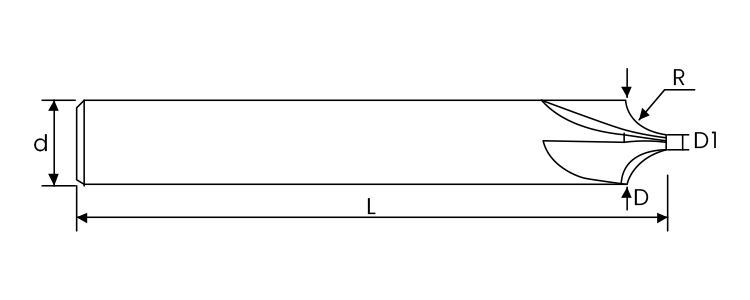
Long tool setups are often unavoidable when machining deep pockets or internal features. They also make the cutter much more sensitive to vibration.
As tool overhang increases, rigidity decreases. The tool can deflect under load, then spring back as the cutting engagement changes. To the operator, this may appear as a minor vibration or a slight change in cutting sound. Over time, the repeated movement can accelerate edge wear.
This is one reason a cutter may perform well during a shallow test cut but wear much faster when used inside a deep cavity.
Use the shortest practical tool setup. Check the holder, collet, and clamping condition as well. Before changing to a more expensive carbide grade, make sure the cutter is not simply being asked to work with too much unsupported length.
Material Makes a Bigger Difference Than It Seems
A corner rounding end mill that performs well on aluminum may behave very differently in alloy steel.
Alloy steel and carbon steel can put relatively high mechanical loads on the cutting edge. Copper and aluminum create other concerns, particularly material adhesion and chip evacuation. Surface hardness, heat treatment, and even variations between batches can also affect tool performance.
The same tool and parameters therefore cannot be expected to produce identical results across different materials.
For BWIN’s carbide corner rounding end mill, the application range includes alloy steel, carbon steel, copper, aluminum, and other non-ferrous metals. The important point is not simply that the cutter can machine these materials. The cutting condition still needs to be adjusted around the material being processed.

Internal Radius Machining Can Make Chip Evacuation Difficult
This is a problem that is easy to overlook.
When machining an internal radius inside a pocket or cavity, chips do not always leave the cutting area cleanly. They can collect around the cutter and become trapped between the tool and the workpiece.
Once those chips are recut, friction and heat increase. The result can be premature wear even when the spindle speed and feed look reasonable.
Coolant delivery also matters. Flood coolant may not reach the cutting edge effectively when the cutter is working deep inside a cavity. Air blast, through-tool coolant, or a different toolpath may provide better chip evacuation depending on the machine and application.
If a cutter wears much faster in a deep pocket than in open machining, chip removal should be one of the first things to investigate.
The Toolpath Can Be Part of the Problem
A good cutter can still have a poor toolpath.
Sudden entry into the workpiece, sharp changes in engagement, and excessive radial contact can all increase the load on the cutting edge. This is particularly noticeable when a dedicated cutter is used to finish an internal radius.
A smoother approach is usually easier on the tool. Instead of forcing the cutter into the material, the toolpath should maintain a reasonably consistent engagement and avoid unnecessary full-width cutting.
For finishing work, the final pass should also be planned around the required surface quality. A radius tool does not need to remove a large amount of material at this stage. Its job is to finish the profile accurately and consistently.
Machine Rigidity Still Matters
When the same cutter gives very different results on two machines, the machine setup deserves attention.
A rigid machine and secure workholding keep cutting forces more predictable. A less stable setup allows vibration to build up, particularly on thin components or parts with weak clamping areas.
The cutter cannot compensate for excessive movement in the workpiece or toolholder.
This is also why tool life should not be compared solely by part count. Ten parts on a rigid machining center under stable conditions may tell you very little about what the same cutter will achieve on another machine with a longer tool extension and less rigid workholding.
Edge Condition Should Be Checked Before It Becomes a Quality Problem
With a conventional roughing cutter, some visible wear may be acceptable for a short period. An inner R end mill is less forgiving because its worn edge directly affects the finished radius.
A useful practice is to inspect the tool before the part moves out of specification.
Watch for changes in surface finish, cutting noise, burr formation, or dimensional consistency. These signs often appear before the cutter reaches a severe wear condition.
For production machining, tool life should therefore be based on the point at which the cutter can no longer produce the required result consistently, not the moment when the edge finally looks damaged.
What Usually Extends the Life of a Corner Rounding End Mill?
There is rarely one magic adjustment.
Start with the basics: use the correct cutter diameter and radius, keep tool overhang under control, and make sure the machine and workpiece are stable. Then look at spindle speed, feed, axial and radial engagement, and the way the tool enters the material.
Chip evacuation deserves the same attention as cutting parameters, especially in deep internal machining.
It also helps to avoid making several changes at once. If spindle speed, feed, step-over, and toolpath are changed simultaneously, it becomes difficult to know what actually improved the result. A controlled adjustment usually gives a clearer answer.
For repeat production, recording tool life by machine, material, part geometry, and cutting condition is even more useful. After a few production runs, patterns start to appear. That information can be more valuable than relying on a generic tool-life estimate.
Choosing a Carbide Corner Rounding End Mill for Production Work
A carbide corner rounding end mill is not just a tool for producing an internal radius. The cutter has to maintain the radius accurately while dealing with the actual conditions inside the machine.
BWIN’s solid carbide inner R end mill is designed for CNC internal radius machining, with a focus on rigidity, wear resistance, and cutting stability. It can be used for alloy steel, carbon steel, copper, aluminum, and other non-ferrous metals, making it suitable for applications such as mold making, automotive components, aerospace parts, and precision machining.
The right choice, however, still depends on the complete application. Tool geometry, material, depth of cut, machine rigidity, tool extension, and programming strategy all influence how the cutter performs.
A technically suitable tool can deliver poor results when the setup is unstable. A well-matched tool under controlled conditions can often run much longer and maintain a more consistent radius.

Final Thoughts
When a corner rounding end mill wears faster than expected, changing the cutter is only one possible solution.
Look at the wear pattern first. Then check the cutting load, tool overhang, workpiece material, chip evacuation, toolpath, and machine rigidity. These factors are closely connected, and a problem in one area can quickly show up as premature wear at the cutting edge.
For internal radius machining, consistency matters as much as tool life. Once the cutter starts losing its radius accuracy or surface-finish performance, continuing to run it rarely saves money.
The better approach is to identify what is causing the wear and correct the machining condition around the tool. With the right setup, a carbide corner rounding end mill can maintain a clean internal radius, stable cutting performance, and more predictable results throughout production.

Add comment